In a city where space is tight and moments move fast, your self-defense needs to work up close, under pressure, and without perfect conditions
New York has a way of compressing life: crowded sidewalks, narrow stairwells, packed subway platforms, and the kind of close contact you did not ask for. That is a big reason Brazilian Jiu-Jitsu fits NYC so well. Instead of relying on big wind-up strikes or lots of room to move, we train you to stay calm, create space, and solve problems when an encounter turns physical.
Brazilian Jiu-Jitsu is also approachable for normal people with normal schedules. You do not need to be a lifelong athlete to start building practical skills. With the right fundamentals, you can make progress within months, and the progress feels real because we pressure-test techniques in controlled training rather than just talking about them.
If you are looking for everyday self-defense, our goal is simple: help you build habits and techniques you can actually use when things get messy, fast, and close.
Why Brazilian Jiu-Jitsu matches real NYC self-defense situations
A lot of real-world problems start with contact, not with a clean punch from six feet away. In NYC, common self-defense situations often involve grabs, shoves, clinches, trips, or being driven into a wall or onto the ground. Brazilian Jiu-Jitsu trains for that exact range.
Close-range control matters more than you think
On a crowded platform or in a tight hallway, distance management is limited. You might not be able to back up safely, and you might not want to swing wildly anyway. We focus on clinch awareness, posture, balance, and controlling the hands and head so you are not just reacting.
Ground survival is a real gap in most people’s skill set
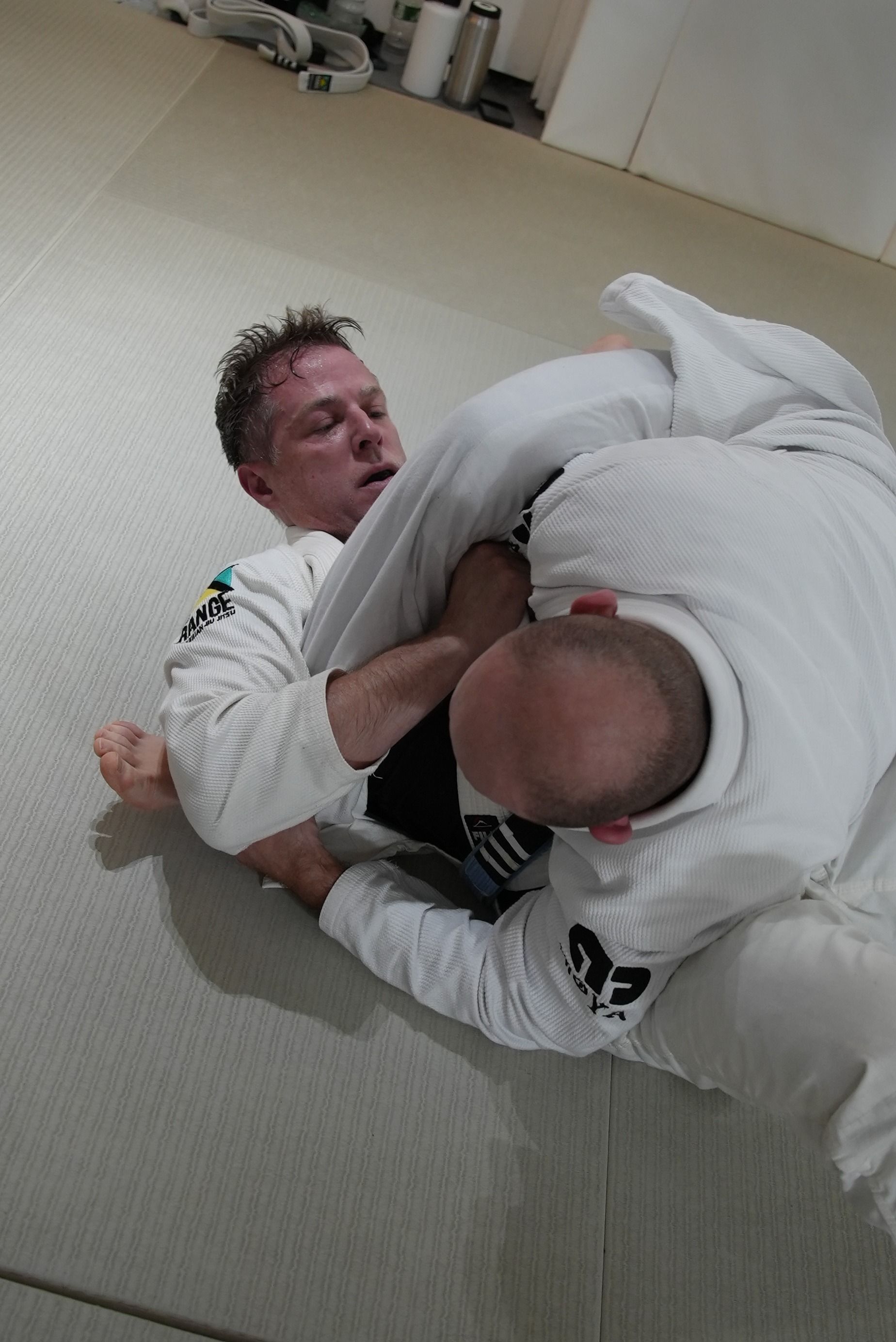
Many fights end up on the ground, even if nobody planned it. Brazilian Jiu-Jitsu is known for ground fighting and positional control, which means we spend time learning how to survive bad positions, reverse them, and get back up. If you are smaller, this matters even more because leverage and structure can beat raw force.
Technique over strength is not a slogan, it is mechanics
Leverage, angles, and timing are the point. You learn how frames stop pressure, how hip movement creates space, and how positioning makes someone’s size less relevant. This is a big reason BJJ has a strong track record in combat sports, with submissions finishing a large share of successful outcomes in MMA, often cited around 75 percent for decisive submission success rates at high levels.
What everyday self-defense looks like in our training
We keep training practical, but we also keep it safe, because safety is what lets you train consistently. And consistency is what changes you. You can read about self-defense all day, but your body has to learn how to respond when your heart rate jumps.
We build your baseline with fundamentals first
Beginners do best when fundamentals are predictable. We teach posture, base, and escapes early because those are the skills that save you when you are surprised. You will spend time on stand-up entries, but you will also learn what to do when you are already in trouble, like someone on top of you or a grip locked around your neck.
Pressure testing without chaos
Real self-defense is stressful, so we add pressure gradually. That means drills, positional sparring, and controlled rolling where intensity matches your experience level. You learn to breathe, think, and move. It is not theatrical, and it is not random. It is specific problem-solving.
How we translate techniques to “street reality”
We talk through context: hard surfaces, cramped space, and the need to disengage. The goal is not to win a sport exchange. The goal is to protect yourself, create an exit, and get home. Many techniques you see in sport BJJ still help, but the intention changes, and we coach that clearly.
Brazilian Jiu-Jitsu self-defense skills you can use quickly
You do not need a black belt to benefit. While the full belt journey often takes 8 to 10 years or more, you can gain meaningful self-defense ability far sooner. Many students feel a noticeable shift within the first few months: better posture under pressure, fewer panic reactions, and more confidence in basic escapes.
Here are the core skills we emphasize early because they show up everywhere in everyday altercations:
• Escaping bottom positions like mount and side control so you can survive and recover when pinned
• Hand fighting and grip breaking to stop pulls, collar grabs, and attempts to control your head
• Standing up safely from the ground using technical stand-ups that protect your balance and face
• Clinch control concepts like head position and underhooks so you are not just being rag-dolled
• Simple submissions and controls used primarily as “tools” to create space, not as a reason to stay and fight
As you keep training, these basics become instinctive, and that is the real win. Under stress, you will not rise to the occasion. You will fall to your level of practice.
Everyday NYC scenarios where BJJ habits show up
We do not train fear. We train readiness. The point is to reduce surprise and increase options.
Subway and platform contact
Crowds create accidental contact, but you still want awareness when contact feels wrong. Our training makes you more sensitive to grips, posture breaks, and off-balancing attempts. Even learning to pummel for inside control and keep your base can stop a situation from escalating.
Building entryways and tight corridors
Narrow spaces remove footwork options. Brazilian Jiu-Jitsu shines here because control, frames, and body positioning work without needing room. You learn how to turn your hips, change levels, and redirect pressure even when your back is near a wall.
Slips, trips, and unexpected falls
Not all takedowns are dramatic. Sometimes you just lose footing, especially in winter. Knowing how to protect your head, recover guard, and stand back up safely is practical in a way most people do not think about until they need it.
Apartment and personal-space boundaries
Many problems begin with someone stepping too close. Our training helps you manage distance with posture and hand placement and, if needed, transition into clinch control that limits damage while you work toward separation.
The mental side: stress control is a self-defense skill
Self-defense is not only physical. It is decision-making under pressure. Brazilian Jiu-Jitsu is uniquely good at training that because you regularly experience uncomfortable positions in a safe environment, then learn how to solve them.
You learn to breathe when you are pinned
It sounds small, but it is huge. When a bigger person is on top, the body wants to panic. We coach breathing, framing, and patience. Over time, you stop wasting energy and start making better choices.
You get used to realistic resistance
Compliance drills have a place, but resistance changes everything. When someone is trying to hold you down, you learn what works, what fails, and what needs adjustment. That feedback loop is why BJJ keeps growing, with millions of practitioners worldwide and strong demand in cities like ours.
Confidence becomes quieter and more stable
Good training does not make you reckless. It tends to do the opposite. You become calmer, less reactive, and more aware of how quickly situations can change. That is a kind of confidence that helps in daily life, not just in a gym.
Strength, mobility, and health benefits that support self-defense
We like self-defense because it is practical, but we also see the side benefits every week. Training improves functional strength, hip mobility, and coordination in ways that carry into everyday movement: picking up groceries, navigating stairs, even sitting at a desk without feeling stiff.
Brazilian Jiu-Jitsu is also a real stress outlet. NYC is intense. Having a place where you focus on one clear task, solve problems, and leave feeling physically tired (in a good way) is valuable. Many students start for self-defense and stay because they feel better overall.
Safety, injuries, and how we train smart
Any contact sport carries injury risk, and BJJ is no exception. Research and gym surveys often point to knees as a common issue, with some reports around 30 percent of practitioners experiencing knee problems in a given year. We take that seriously.
How we reduce risk without watering down training
We emphasize clean technique, controlled intensity, and tapping early. We also teach you how to be a good partner, which might be the most underrated safety skill of all.
What you can do to train safer
A few habits make a big difference:
1. Show up consistently, but avoid “all-out” effort every round, especially as a beginner
2. Tap early and tap often while you are learning positions you cannot see yet
3. Ask questions when something feels unclear or unsafe, because clarity prevents accidents
4. Focus on mobility, especially hips and ankles, since they protect the knees
5. Prioritize good sleep and recovery, because fatigue makes people sloppy
We want you training next month and next year, not just surviving one hard session.
What to expect as a beginner in our NYC classes
A lot of people hesitate because they assume everyone will be advanced or super athletic. In reality, most students start as regular adults with jobs, stress, and a learning curve. That is normal.
Your first few weeks
You will learn how to move on the ground, how to hold posture, and how to escape common pins. You will also learn basic etiquette and pacing. The room can feel busy at first, but the structure becomes familiar quickly.
Progress you can measure
We like measurable improvement: escaping more often, staying calmer, keeping better balance, and understanding positions instead of guessing. The belt system gives long-term structure, and many students aim for milestones like blue belt, which often takes around a couple of years with steady training, but the self-defense gains start much earlier than that.
Scheduling and consistency
NYC schedules are unpredictable, so we keep training accessible by offering a class schedule that supports consistent practice. Two to three sessions per week is a sweet spot for many people, but even one consistent session is better than bursts of motivation followed by long gaps.
The Next Step With Range Brazilian Jiu-Jitsu NYC
Putting self-defense into your body takes practice, and the most effective practice is the kind you can repeat week after week. At Range Brazilian Jiu-Jitsu NYC, we focus on fundamentals, real resistance, and a training environment where you can build skill without feeling thrown into the deep end on day one.
If you want Brazilian Jiu-Jitsu training that fits the realities of New York, we would love to have you in class and help you build the kind of calm, practical self-defense that shows up when you need it.
If you want a clearer sense of our approach before you come in, you can read more about us on the about page.