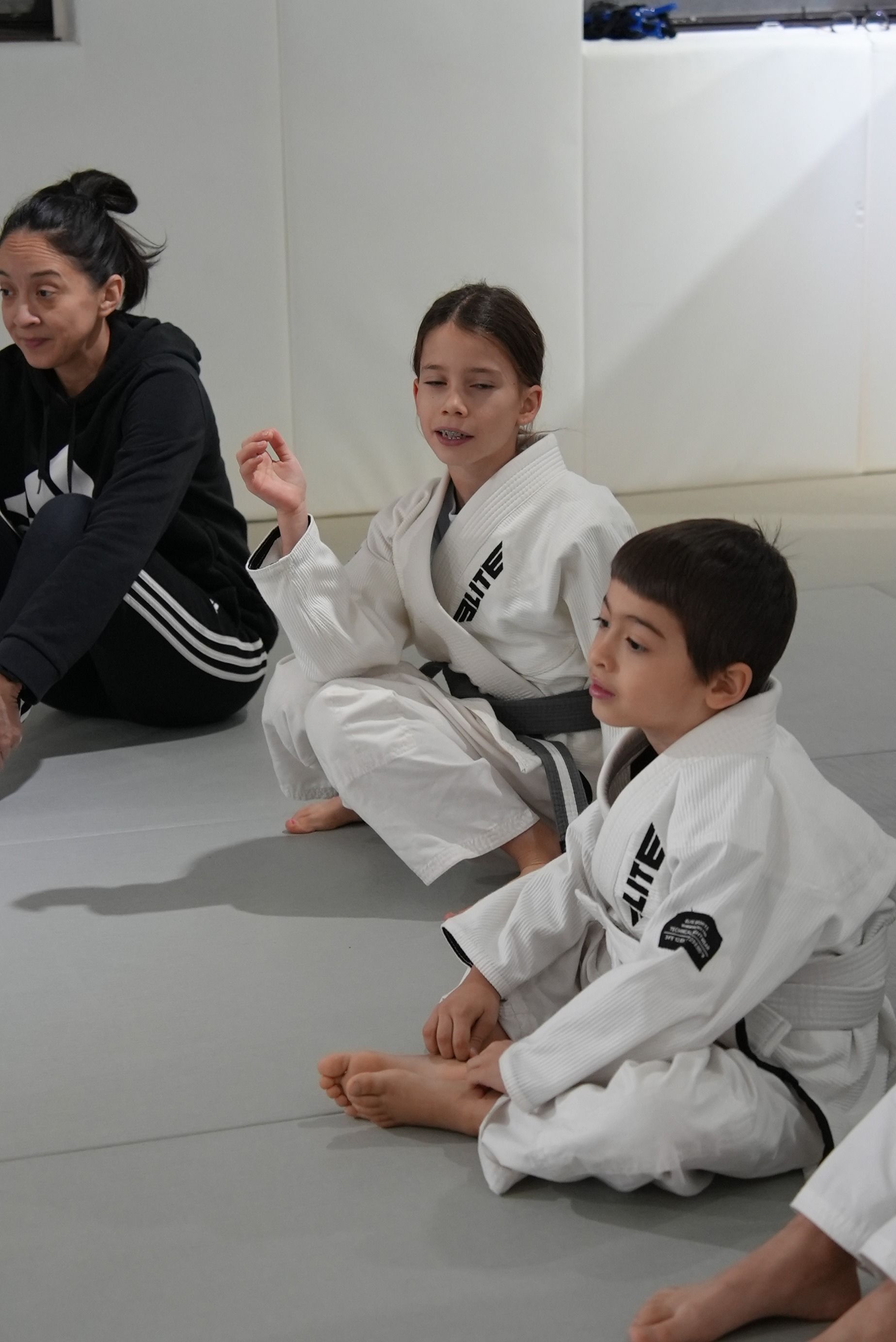
A well-run kids martial arts class can become the calm, consistent anchor your child looks forward to each week.
Life moves fast in New York, even for kids. School expectations, crowded commutes, screens everywhere, social pressure, and packed after-school calendars can leave children feeling revved up, checked out, or both. When parents ask us about Youth Brazilian Jiu-Jitsu, the question underneath is often simpler: Can this help my child feel better day to day?
Our answer is that Youth Brazilian Jiu-Jitsu can be a strong support for mental wellness because it pairs movement with structure and coaching. Kids get a clear routine, a safe way to release energy, and repeated practice staying calm under pressure. That combination matters in NYC, where consistency and indoor, year-round activities can make a real difference for families.
We also want to be careful with language. Training is not therapy, and we never present it that way. But a high-quality program can support habits linked to better emotional regulation, resilience, focus, and self-confidence, the same life skills that help kids thrive at home and school.
Why Youth Brazilian Jiu-Jitsu can support mental wellness in kids
Mental health for children is not just about big feelings. It is also about the smaller, everyday skills: noticing frustration early, taking a breath before reacting, trying again after a mistake, and feeling like you belong somewhere. Youth Brazilian Jiu-Jitsu trains those moments on purpose, even when it looks like simple drills from the outside.
Because jiu-jitsu is problem-solving with your body, kids practice thinking while moving. They learn that effort matters, that setbacks are temporary, and that the next round is a fresh start. That is a powerful lesson for kids who get stuck in perfectionism, worry, or quick discouragement.
And honestly, it helps that training feels real. The goals are clear. The feedback is immediate. Progress shows up in small wins that a child can actually feel.
The mental health mechanisms that happen in class
Predictable routine reduces stress and decision fatigue
NYC kids make a lot of decisions all day long. A structured class reduces the mental load. We warm up the same way, follow a clear lesson plan, and reinforce consistent rules for safety and respect. Over time, kids relax into the rhythm.
That routine can be especially helpful for children who struggle with transitions after school. When your child knows what comes next, nerves soften and cooperation often improves. It turns the after-school hour from chaotic to steady, which parents tend to notice at home.
Coached emotional regulation through safe, controlled challenge
In Youth Brazilian Jiu-Jitsu, kids practice staying composed when something feels hard. That might be holding a position, escaping, or simply being patient while a partner gets their turn. Those are small stressors, but they are exactly the kind of stress that teaches regulation.
We coach kids to use simple tools: reset posture, breathe, listen, try the next step. A child who tends to melt down when frustrated can learn to pause instead of spiraling. A child who gets anxious can learn that discomfort is survivable and temporary.
Belonging and social confidence without the usual social pressure
Some kids love team sports, but others dislike the social dynamics that come with them. Youth Brazilian Jiu-Jitsu creates connection in a different way. Partners switch often, everyone starts as a beginner, and progress is personal. That tends to reduce the comparison trap.
We focus on teamwork, patience, and respect, so kids learn how to be a good partner, not just how to win. Over time, friendships form naturally. For shy kids, it can feel easier because conversation is not the main event. Training is.
Confidence built from competence, not hype
Confidence sticks when it is earned. In jiu-jitsu, kids learn specific skills, practice them, and see improvement. That competence becomes a quiet kind of self-belief. You might notice your child standing taller, speaking up more, or handling small conflicts with less panic.
We also emphasize discipline, emotional maturity, and working through challenges. Those are not just martial arts values. They are mental wellness skills in disguise.
Why this matters specifically for families in New York City
Youth Brazilian Jiu-Jitsu in New York is not only about learning techniques. It is also about giving kids a consistent, indoor routine that works in every season. When it is dark early, when it is raining, when winter feels endless, a reliable class can keep the week from feeling scattered.
NYC parents often tell us they want an activity that checks multiple boxes:
• Structured after-school time that is not just screen time
• Physical movement that improves sleep and mood
• A respectful environment with clear boundaries
• Practical self-defense confidence without encouraging aggression
• A community where kids can be known and supported
That list is exactly why Youth Brazilian Jiu-Jitsu fits so well. It is challenging, but it is also coached and controlled. Kids learn how to manage their bodies and their emotions in the same room, which is a rare combination.
How we build mental-skills training into Youth Brazilian Jiu-Jitsu
We do not leave character development to chance. Our youth curriculum reinforces respect, discipline, patience, teamwork, focus, and confidence. When kids learn to wait their turn, partner safely, listen closely, and keep trying, those habits transfer.
A typical class includes movement, technical instruction, partner drills, and age-appropriate sparring or positional games where kids can apply what they learned. The goal is not to overwhelm. The goal is to create the right amount of challenge so growth happens without chaos.
Here are a few ways that shows up week to week:
• Clear rules and consistent expectations so kids feel safe and understood
• Step-by-step coaching that rewards effort and attention, not just natural athleticism
• Controlled partner work that teaches cooperation, not intimidation
• Frequent chances to reset after mistakes so kids practice recovery, not embarrassment
• Positive reinforcement for patience and emotional maturity, especially when something is difficult
That is how Youth Brazilian Jiu-Jitsu supports mental health in practice: repetition, structure, and a culture that treats growth like a process.
Age-based classes: why developmental fit matters
Kids are not small adults, and a one-size-fits-all approach usually backfires. We use age-based training because attention span, coordination, and emotional regulation change quickly as children grow.
Little Warriors (ages 5 to 9)
For younger kids, we prioritize fundamentals, body awareness, and classroom habits. We keep instruction simple and practical, then repeat it enough that it sticks. The mental health support here often looks like improved impulse control, better listening, and a more patient response to frustration.
Teen Warriors (ages 10 to 13)
Preteens and young teens need something different: more agency, more problem-solving, and challenges that feel meaningful. We give them technical depth and responsibility while still keeping the environment supportive. This age group often benefits in confidence and stress management, especially as school and social pressure ramp up.
We also offer unlimited training opportunities, which is helpful for families who want a consistent routine. Some kids do best with one class a week; others want more structure. Having options makes it easier to find the right rhythm.
Bullying, boundaries, and calm confidence
One of the biggest reasons NYC parents look for Youth Brazilian Jiu-Jitsu is bullying concerns. We approach this carefully. Our goal is not to turn kids into fighters. Our goal is to build calm, capable kids who carry themselves differently, set boundaries, and know what to do if a situation becomes physical.
In training, kids learn to:
• Stay composed under pressure
• Use leverage and positioning rather than panic strength
• Recognize when to disengage and get help
• Treat partners with respect, even in competitive drills
That mindset often changes how a child walks into school. Calm confidence is noticeable, and it can reduce the likelihood of being targeted. It also helps kids avoid escalating conflicts, which is just as important.
How often should your child train?
Consistency beats intensity. For most families, two classes per week is a sweet spot for progress, routine, and recovery. One class per week can still build confidence and familiarity, especially for brand-new students. Three or more classes per week can work well for kids who crave structure and truly love being on the mat.
If your child is dealing with stress or anxious feelings, a predictable schedule helps. Pick days you can stick to. Let training become part of the week like homework and dinner, not a last-minute scramble.
What your child needs for the first class
Parents sometimes worry about gear, athletic background, or whether their child will feel out of place. We keep the first step simple. You do not need a naturally athletic kid to start Youth Brazilian Jiu-Jitsu. You just need a willingness to try.
For a first class, we typically recommend:
1. Comfortable athletic clothes your child can move in
2. A water bottle with their name on it
3. A small snack for afterward, because kids get hungry fast
4. Arriving a little early so your child can settle in and meet us
5. A quick check-in with our staff so we can place your child in the right age group
If your child is nervous, that is normal. We see it all the time. The nerves usually fade once movement starts and the structure becomes clear.
Is Youth Brazilian Jiu-Jitsu good for shy kids or high-energy kids?
Both, and for different reasons.
Shy kids often benefit because the social entry point is shared activity, not conversation. They learn partner skills gradually, and they get repeated chances to succeed in small ways. That builds confidence without putting them on the spot.
High-energy kids often benefit because training gives them a clear container for movement. Instead of being told to sit still endlessly, they learn when to go and when to pause. Over time, we often see better self-control and focus, not because we demand it, but because the class requires it in a practical way.
FAQ: quick answers NYC parents want
What age should a child start Brazilian Jiu-Jitsu?
Many kids can start around age 5, when they can follow basic directions and participate safely in partner drills.
Is BJJ safe for kids?
When taught with clear rules, close supervision, and age-appropriate intensity, Youth Brazilian Jiu-Jitsu is typically a controlled sport with strong safety norms.
Can Youth Brazilian Jiu-Jitsu help with confidence or anxiety?
It may help by building routine, physical competence, and calm problem-solving under pressure. We view it as supportive, not as medical treatment.
Will training help with focus at school?
It can, because kids practice listening, sequencing steps, and sticking with a task even when it is challenging.
Take the Next Step with Range Brazilian Jiu-Jitsu NYC
If you want an after-school activity that supports confidence, resilience, focus, and emotional maturity, Youth Brazilian Jiu-Jitsu is a practical place to start. We have built our youth program around age-based structure, respectful coaching, and the kind of steady challenge that helps NYC kids grow without feeling overwhelmed.
Range Brazilian Jiu-Jitsu NYC is here to help you choose the right track, set a sustainable schedule, and make the first class feel comfortable for your child, even if your child is brand new to martial arts.
Put the techniques you read about into practice on the mats at Range Brazilian Jiu-Jitsu NYC.