Brazilian Jiu-Jitsu gives you a workout you cannot phone in, because every round is a new problem to solve.
New York is packed with ways to sweat, but most gym routines still boil down to counting reps, staring at a clock, and trying to stay motivated when nothing changes except the playlist. We built our adult training around a different idea: fitness should feel alive, skill-based, and surprisingly social. That is exactly what Brazilian Jiu-Jitsu delivers.
Brazilian Jiu-Jitsu is also not a niche hobby anymore. It has more than 5 million practitioners worldwide, and search interest in the US has climbed sharply over the last two decades, making it one of the fastest-growing martial arts in America. Growth is nice, but what matters to you is simpler: it works for real bodies, real schedules, and real NYC stress.
If you are looking for adult Brazilian Jiu-Jitsu in New York because you want better conditioning, practical self-defense, or just a training routine you will actually stick with, we designed our classes to meet you where you are and keep you progressing.
Why NYC gym workouts get boring fast
A lot of New Yorkers are disciplined, but discipline is not the same as engagement. Traditional gym training often becomes repetitive because the environment never pushes back. You can lift heavier or run longer, but the challenge is mostly internal, and that is tough after a long workday and a crowded commute.
Brazilian Jiu-Jitsu gives you external feedback in the most direct way possible: your training partner. When a technique works, you feel it. When it does not, you adjust in real time. That loop creates focus, and focus is the missing ingredient in most fitness plans.
There is also a practical NYC detail people overlook: space. BJJ in New York fits city life because the training is compact and equipment-light. You do not need rows of machines or a giant weight setup to get a full-body session. A clean mat, good coaching, and a room of training partners goes a long way.
The fitness you get from Brazilian Jiu-Jitsu feels different
Cardio on a treadmill is predictable. Strength work can be methodical and slow. Brazilian Jiu-Jitsu blends both, and it does it in a way that keeps your brain switched on, which is why many people say time moves faster in class than in a gym.
You will build conditioning through live movement: bridging, posting, scrambling, and controlling your breathing under pressure. You will also build strength in angles that do not show up in mirror workouts, like pulling, gripping, hip extension, and isometric holds while you stabilize.
Just as important, the intensity is scalable. Some days you train hard. Some days you train technical. Either way, you leave with the sense that you learned something, not just that you survived a workout.
What your body actually learns on the mat
We coach you toward efficiency. That means less wasted effort and better mechanics, which is ideal if you are returning to training after time off or you are trying to stay athletic without beating yourself up.
Over time, you can expect benefits like:
- Improved aerobic capacity and recovery, because rounds force you to manage pace and breathing
- Stronger hips, back, and core from constant posture battles and positional control
- Better mobility from moving through seated, kneeling, and standing transitions
- Real grip strength in gi training, plus forearm and shoulder endurance
- Coordination and balance gains that carry over to everyday movement in the city
None of this requires you to be “in shape” first. Getting in shape is a side effect of showing up.
Skill-building beats motivation every time
Motivation is unreliable in January, and it is even more unreliable in August when the subway is humid and your day has been long. Skills solve that problem. When you train Brazilian Jiu-Jitsu, you are collecting tools: escapes, guard passes, sweeps, and submissions. Progress becomes tangible.
Belt progression also gives structure. On average, earning a black belt takes about 3 to 5 years, but you do not need to chase that milestone to benefit. Most adults feel changes much sooner: better fitness within weeks, better composure under pressure within months, and a growing sense of competence as techniques start connecting.
There is a reason membership retention in this sport is often strong, commonly tied to community and consistency. When training is interactive, people keep coming back. We see that pattern all the time in adult BJJ in New York: a steady schedule and a clear path beats random bursts of effort.
A practical approach to self-defense for NYC
New York is busy, unpredictable, and close-quarters. Brazilian Jiu-Jitsu is built for close-range control, which makes it especially relevant here. We focus on fundamentals that help you manage distance, stay balanced, and control someone without relying on size or strength.
Self-defense is not just about fighting. It is also about awareness, decision-making, and staying calm when adrenaline spikes. Training helps because you experience pressure in a controlled setting, then learn to respond with technique instead of panic. That carries into everyday life in small ways, like feeling more grounded walking at night or staying calmer during stressful moments.
We also keep training responsible. You will learn how to apply techniques with control, how to tap early, and how to protect training partners. Safety is not an afterthought, it is part of the skill.
What an adult beginner can expect in our classes
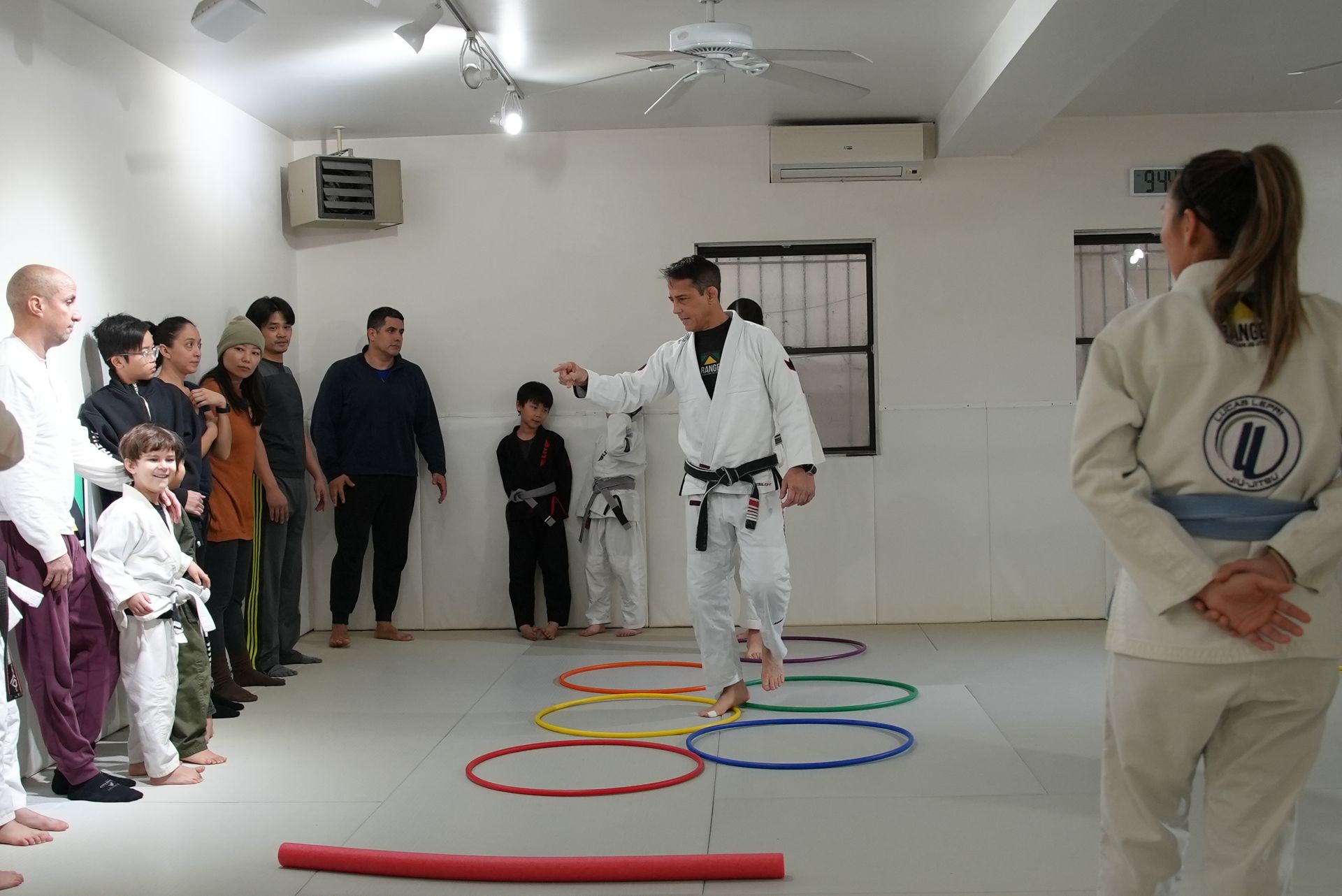
Walking into your first class can feel like stepping into a new language. We make that easier by teaching in layers, so you can focus on a few concepts at a time and still feel successful in day one.
A typical class includes instruction, drilling, and live training that matches your level. Live rounds are where the magic happens, but we introduce them intelligently so you build confidence without feeling thrown into chaos.
Here is what many beginners notice right away: you are not just working out, you are learning how to move with purpose. Even your warmups start to connect to techniques, which makes the whole session feel coherent.
Gi vs no-gi in BJJ in New York: what should you choose?
You will hear this question early, because both styles are popular. Gi training uses the uniform grips, which slows things down and makes control, posture, and escapes very technical. No-gi is faster and gripless, which changes the pace and emphasizes wrestling-style controls.
Competition trends show no-gi continuing to rise, and major events have reported chokes as a dominant finishing category. That is not surprising: when you learn to control position and isolate the neck, you can end a round efficiently. In gi settings, you also see technique differences in submissions that rely on fabric grips.
Our view is simple: both styles build strong grappling, and your choice should match your goals and schedule. If you are brand new, starting with gi can make learning feel clearer because grips slow down the scramble. If you like speed and athletic movement, no-gi might click faster. Many adults eventually enjoy training both.
How to start and keep progressing without burning out
NYC schedules are real. We built our program so you can train consistently without needing to treat it like a second job. For most adults, two to three sessions a week is enough to build momentum. More can help, but consistency matters most.
Here is a straightforward approach we recommend for beginners:
1. Choose two class days you can actually protect, even when work gets busy
2. Focus on one position for a few weeks, like guard retention or side control escapes
3. Keep notes on one detail per class, because small details compound quickly
4. Add intensity gradually, so your joints and cardio catch up together
5. Ask questions after class, because clarity prevents bad habits
That plan sounds almost too simple, but it works because it respects how adults learn and recover.
The community factor: why people stick with it
A gym can feel anonymous. You might see the same faces, but not really connect. Brazilian Jiu-Jitsu tends to build community because you are cooperating while training something difficult. You drill together, you problem-solve together, and you learn each other’s rhythm over time.
We also notice something subtle: class gives you a break from your phone. For many New Yorkers, that alone is a relief. When you are trying to pass someone’s guard, you cannot multitask. You are present, even if your day started off scattered.
And yes, it is fun. It is challenging fun, but still fun. You will have days where a technique finally clicks and you walk out feeling lighter, even if you are physically tired.
Ready to Begin
If you want a fitness routine that stays interesting, builds real capability, and fits city life, we designed our training to deliver exactly that. At Range Brazilian Jiu-Jitsu NYC, our adult program centers on fundamentals, smart intensity, and a clear progression path so you can improve week by week without guessing.
Whether your goal is better conditioning, practical self-defense, or simply a more engaging way to train, we would love to show you what Brazilian Jiu-Jitsu can feel like when coaching, structure, and community all line up in New York.
Train with experienced instructors and a supportive community by joining a Brazilian Jiu-Jitsu class at Range Brazilian Jiu-Jitsu NYC.