In a city that runs on ambition and limited free time, this is the rare hobby that makes you fitter, calmer, and more capable at once.
New York doesn’t need another trend, but Adult Brazilian Jiu-Jitsu keeps winning people over anyway because it fits how you actually live here. You want a workout that does more than burn calories. You want a skill you can use. And you want a community that feels real, not just a quick hello between treadmill sets.
We also see something unique about Brazilian Jiu-Jitsu in New York: the access is unusually strong. The state has hundreds of schools with dedicated BJJ programs, and NYC alone has dozens of academies listed depending on the directory you look at. That kind of density changes everything, because it means you can train near home, near work, or along a commute route, which is basically how adults in this city make hobbies stick.
This article breaks down why Adult Brazilian Jiu-Jitsu in New York is surging, what you can expect as a beginner, and how to make training work with a real NYC schedule.
Why Adult Brazilian Jiu-Jitsu Works So Well in NYC Right Now
NYC is competitive by nature, but your hobby shouldn’t feel like another performance review. What we love about this moment is that more adults are choosing grappling for the right reasons: structure, progress you can measure, and a break from screens that doesn’t require you to disappear upstate for the weekend.
A big driver is visibility and convenience, not novelty. With so many gyms and so many published adult schedules across the city, training is easier to try, easier to fit in, and easier to return to after a hectic week. Many academies also offer both gi and no-gi classes and allow drop-ins, which lowers the friction for adults who want to test the waters before committing.
And because New York has such a deep BJJ ecosystem, the overall beginner experience has improved. Clear class schedules, intro options, and beginner-friendly structure have become normal expectations in the city. That matters if you’re starting as an adult and you want guidance, not chaos.
The Real Appeal: Fitness, Stress Relief, and Practical Skill in One Membership
Most adult hobbies in NYC solve one problem. BJJ tends to solve three.
Efficient, full-body fitness without feeling like “just cardio”
Adult Brazilian Jiu-Jitsu builds strength, mobility, and conditioning in a way that feels purposeful. You’re not counting reps; you’re learning leverage, timing, and how to move with another human being trying to stop you. It’s intense, but it’s also oddly engaging, so people often train more consistently than they do with typical gym routines.
Stress relief that actually lasts past the class
A hard round forces focus. You can’t half-scroll your way through sparring. For many NYC adults, that becomes the point: training creates a clean mental reset after work, after commuting, after the endless open tabs. The mental-health angle is becoming central across the sport, with more adults framing training as support for anxiety, stress, and resilience.
Practical self-defense for real life
BJJ’s reputation comes from its realism. You learn how to control distance, off-balance someone, escape bad positions, and stay calm when things get physical. That doesn’t mean we train recklessly. It means we train with purpose, using progressive intensity so you can build skill safely over time.
NYC Makes It Easy to Start Because the Scene Is So Built Out
When people say Adult Brazilian Jiu-Jitsu in New York is booming, it’s not just hype. Directories track hundreds of Brazilian Jiu-Jitsu gyms across New York State and report dozens in NYC alone, with counts like 33 in the city and up to around 80 academies in the broader New York, New York area depending on the source. That level of saturation means two important things for beginners:
First, adult schedules are normal. Morning, lunch, evening, and weekend classes are common across the city, which is exactly what working adults need. Second, beginners aren’t unusual. In a dense market, programs tend to accommodate brand-new students because there are always adults starting fresh.
The result is a much softer entry ramp than many people expect. You don’t need to be “a fighter.” You need a willingness to learn and the patience to be new at something again.
Gi vs No-Gi: What NYC Adults Should Know Before Picking a Class
A common beginner question is simple: what’s the difference, and do you need to choose?
In most NYC schedules, you’ll see both options, and that’s great because each teaches you something slightly different.
Gi training
The gi is the traditional uniform with a jacket and pants. Because you can grip fabric, gi classes often feel a bit more technical and methodical. You’ll learn how to use grips for control, how to defend them, and how to move with precision when someone has a strong hold on you.
No-Gi training
No-gi is typically practiced in rash guards and shorts or spats, and it moves faster because you can’t rely on cloth grips. No-gi grappling has been rising in popularity, influenced by modern competition formats and a broader trend toward faster, more athletic styles. You’ll also hear more about leg-lock awareness and submission-focused sequences in no-gi environments, along with a stronger emphasis on wrestling-style takedowns.
For most adults, the best approach is simple: start where the schedule fits your life, then explore both once you feel comfortable. Consistency beats perfect planning every time.
What to Expect in Your First Adult Class (And What to Wear)
Walking into your first class can feel like showing up to a party where everyone knows the rules and you don’t. We get it, and we structure the experience so you can relax and focus on learning.
Here’s what most beginner-friendly adult classes include:
• A warm-up that prepares your joints and hips for grappling movement, usually mobility-focused rather than endless calisthenics
• Technique instruction with clear steps, where we demonstrate, explain, and answer questions without rushing
• Partner drilling at controlled speed so you can repeat the movement and actually remember it
• Optional positional sparring or light rounds, depending on the class format and your comfort level
• A quick wrap-up where you can ask practical questions about training frequency, uniforms, and next steps
What to wear depends on the class type. For gi, you’ll wear a gi (and we can help you figure out sizing). For no-gi, wear a fitted athletic top like a rash guard or compression shirt and training shorts without pockets or zippers. Bring water. Also, plan to arrive a little early so you can get oriented without feeling rushed by the clock.
Safety for Adults Over 30 and 40: How We Keep Training Sustainable
One reason Adult Brazilian Jiu-Jitsu has become a long-term hobby for NYC professionals and parents is that modern training culture takes safety seriously. Yes, it’s a contact sport, but it’s not a brawl. Good training is controlled, technical, and respectful.
A few principles matter most:
Tapping is a skill, not a weakness
If a submission is locked in, you tap early. That’s the deal. You’re protecting your joints and your training future. The goal is to come back tomorrow.
Progressive intensity
You don’t need to “win” your first week. We build your base first, then intensity rises naturally as your timing and awareness improve.
Clean habits and hygiene
NYC gyms are busy places, so cleanliness matters. Shower soon after training, wash gear every session, keep nails trimmed, and don’t train if you have a skin issue that could spread. These small habits protect the whole room.
Smart partner culture
Training partners help determine whether BJJ feels safe and welcoming. We coach control, especially with newer students, and we encourage communication so you can set the right pace.
How Often Should You Train Each Week?
The best schedule is the one you can repeat, even during chaotic NYC weeks.
If you’re brand-new, we typically recommend starting with two classes per week. That gives your body time to adapt and your brain time to absorb the basics. If you feel good after a few weeks, three sessions per week is a sweet spot for many adult students because progress becomes noticeably faster without turning training into a second job.
If you’re already active, it’s tempting to jump to five days a week. Sometimes that works, but many adults do better with a steadier rhythm, especially when sleep, commuting, and work stress are part of the equation. Recovery is part of training, even if it’s not the exciting part.
Modern Trends NYC Adults Are Loving: Wrestling, Leg-Locks, and Smarter Training
The sport itself has been evolving, and that’s part of why it feels fresh right now.
No-gi continues to grow, and with it you’ll see increased attention on leg-lock awareness, submission chains, and transitions that look almost like problem-solving in motion. At the same time, takedown and wrestling fundamentals are getting more emphasis, which makes training feel more complete and athletic than the old stereotype of always starting on the knees.
We’re also seeing adult hobbyists take training more seriously in a healthy way: tracking sleep, recovery, and workload with wearables and apps, then adjusting intensity like an actual plan rather than pure guesswork. When you’re balancing adult responsibilities, that approach keeps you progressing without burning out.
Women in Adult Brazilian Jiu-Jitsu: Growth, Leadership, and Better Training Rooms
Women’s participation is a visible part of the growth story in NYC, and it changes the training environment for the better. More women on the mats means more training partners, more perspectives, and often a stronger emphasis on technical precision and control. Many programs also offer women-led classes or women-focused training times, which can remove a lot of intimidation for first-timers.
For women who want practical self-defense and confidence, Adult Brazilian Jiu-Jitsu in New York offers something concrete: you learn how to manage distance, frames, grips, escapes, and control against resistance. The confidence comes from doing it, not from hearing about it.
Neighborhood and Commute Convenience: Why NYC Adults Actually Stick With It
A hobby lives or dies by logistics in this city. NYC’s density makes Brazilian Jiu-Jitsu in New York unusually convenient because you can often find training close to where you already spend your day.
Across Manhattan, you’ll see active BJJ presence in areas like Midtown, Lower Manhattan, the Upper West Side, Gramercy, and Washington Heights. Brooklyn and nearby areas add even more options. The point isn’t that you should spend hours researching. The point is that in NYC, consistency is easier because training can fit into a commute pattern: before work, after work, or on weekends without sacrificing your whole day.
And that convenience matters because skill builds through repetition. Even two consistent sessions per week, month after month, changes how you move and how you feel in your body.
How Long Until You Can Defend Yourself?
This is a fair question, and we treat it honestly. You can learn useful concepts quickly: base, posture, how to stand up safely, how to escape common pins, and how to stay calm under pressure. Many beginners feel a real shift in confidence within the first couple of months because the unknown becomes familiar.
At the same time, self-defense is a long game. The deeper benefit of Adult Brazilian Jiu-Jitsu is that you’re building timing and decision-making under resistance, which takes consistency. If your goal is practical capability, we recommend focusing on fundamentals, training with controlled intensity, and showing up regularly rather than chasing quick hacks.
Take the Next Step
If you’ve been looking for a hobby that fits NYC life, Adult Brazilian Jiu-Jitsu checks an unusual number of boxes: efficient fitness, stress relief, real skill, and a community you’ll actually get to know. When the class schedule is flexible and the beginner pathway is clear, it becomes much easier to start, and even easier to stay consistent once you feel that first spark of progress.
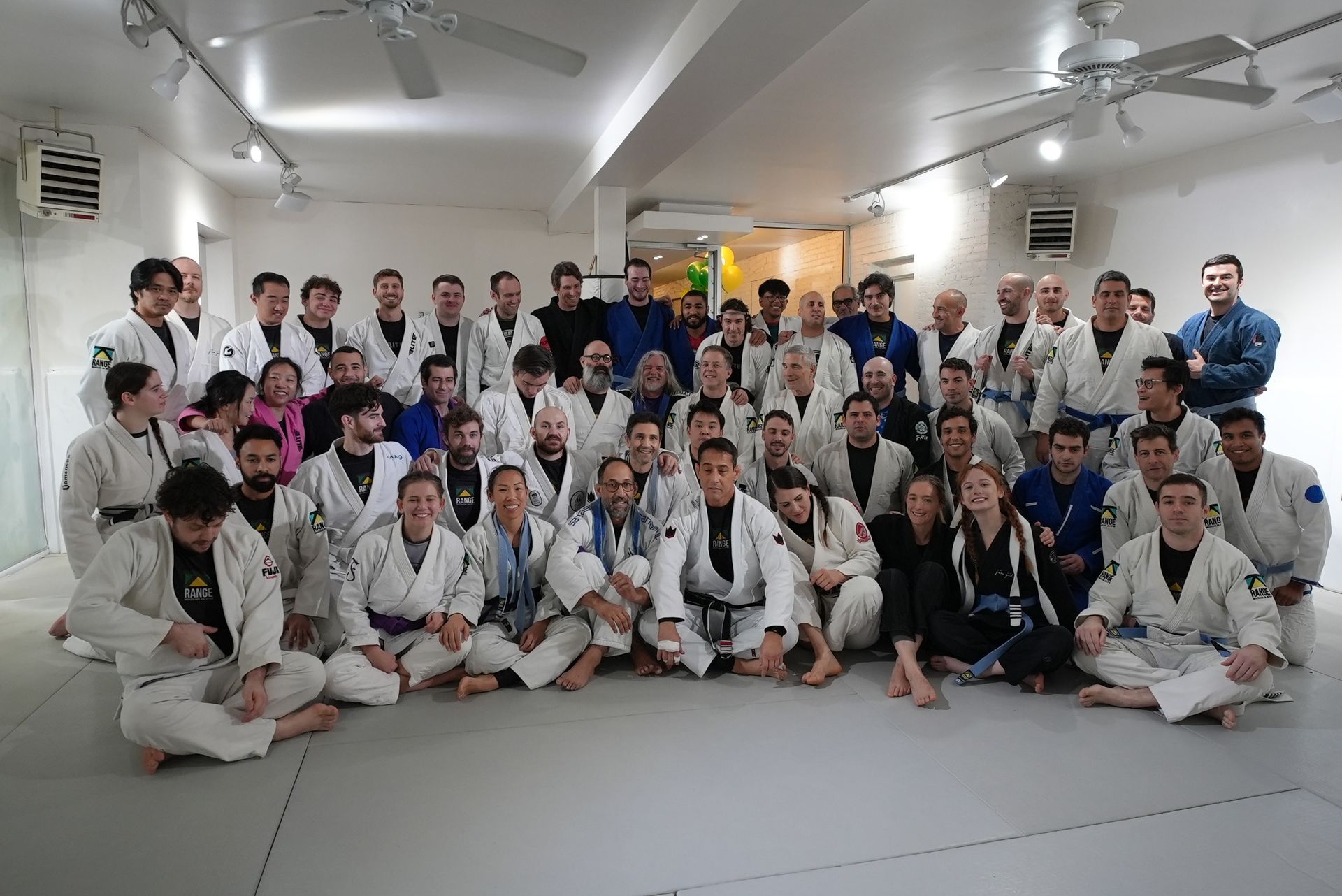
We built our training environment to meet busy New Yorkers where you are, whether you’re returning to athletics after years away or starting your first serious fitness routine as an adult. When you’re ready, we’d love to welcome you to Range Brazilian Jiu-Jitsu NYC and help you make this hobby part of your week in a way that feels sustainable.
Take what you learned here and apply it on the mats by joining a Brazilian Jiu-Jitsu class at Range Brazilian Jiu-Jitsu NYC.