Brazilian Jiu-Jitsu gives you a workout, a skill, and a community in the same hour, which is exactly what most New Yorkers actually need
If you have ever left a gym feeling like you did a lot but learned nothing, you are not alone. Many adult fitness routines in New York end up being repetitive, time-consuming, or hard to sustain once work, commuting, and real life kick in. That is a big reason Brazilian Jiu-Jitsu has become such a powerful shift in how adults here train, recover, and stay consistent.
We see it every week: people come in looking for a practical workout, but what keeps them coming back is that the training feels alive. Brazilian Jiu-Jitsu is not just “cardio” or “strength day.” It blends conditioning, coordination, problem-solving, and real human connection, all while giving you measurable progress you can feel.
And yes, it gets you in shape. Hard. Intense training sessions are often estimated around 700 to 1,000 calories per hour depending on intensity, pace, and experience level, which is why many adults feel changes in endurance and body composition faster than they expected.
Why NYC adults are choosing skill-based fitness over “just workouts”
New York has no shortage of ways to sweat. The difference is that most workout trends are built around short-term motivation. Skill-based training is built around progress, and progress is what makes consistency easier.
Brazilian Jiu-Jitsu keeps your attention because there is always a next layer: a better way to move your hips, a smarter way to frame, a cleaner way to escape, a calmer way to breathe under pressure. Your body adapts because it has to, and your mind stays engaged because the game keeps changing.
Efficiency matters more here than almost anywhere
NYC adults are busy in a way that is hard to explain until you live it. When your day is packed, you want training that is high return on time. A good class can give you:
• Cardiovascular work through live movement and rounds
• Strength endurance from gripping, posting, and controlled resistance
• Mobility gains through angles, transitions, and floor movement
• Real coordination and balance that carries into daily life
You are not stacking separate sessions to get those benefits. You are training one system that naturally blends them.
The workout is different every time, and that is the point
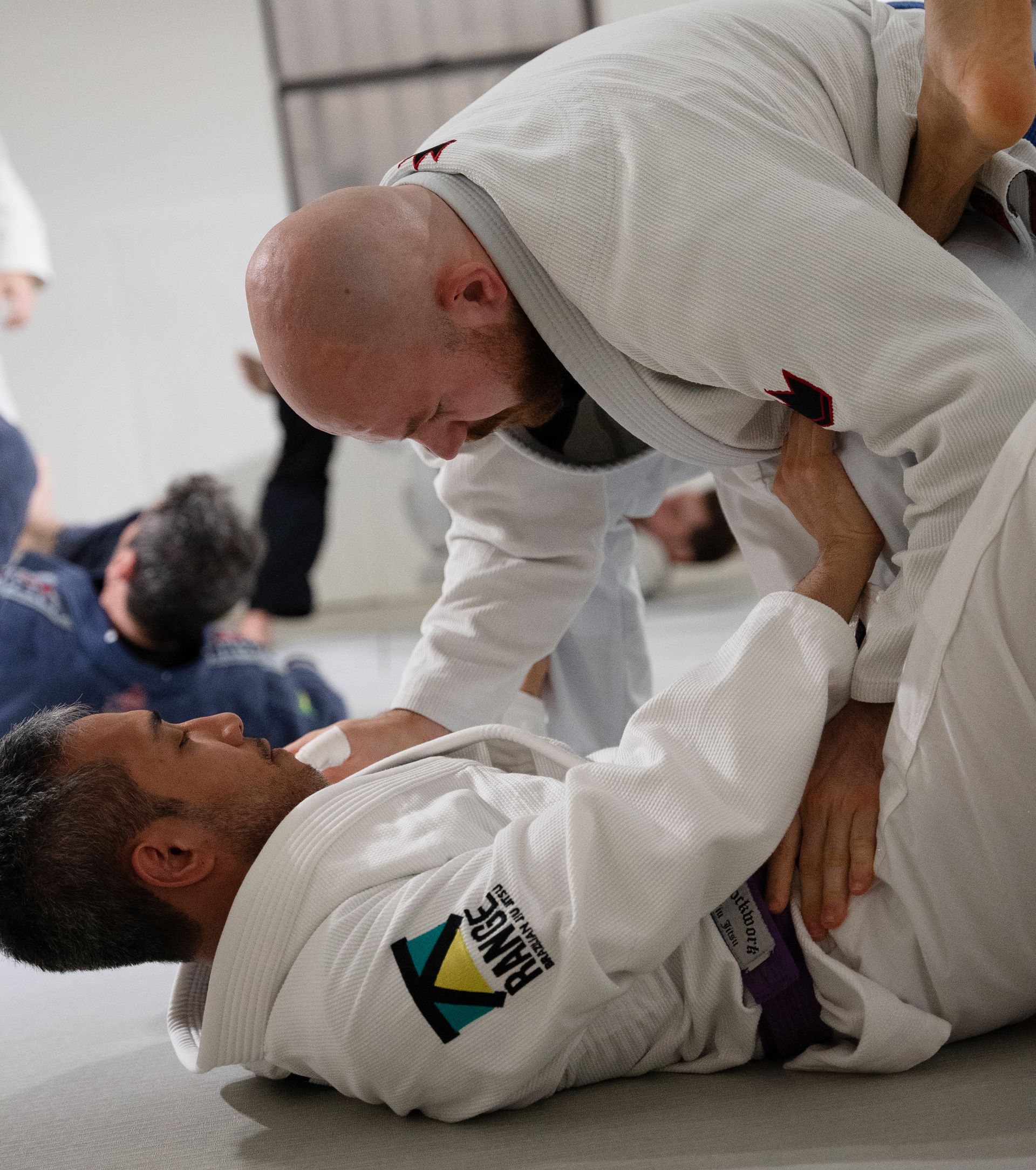
A treadmill never surprises you. A training partner will, in the best way. The variability of Brazilian Jiu-Jitsu forces your body to adapt to different grips, speeds, and body types. That constant problem-solving is part of why adults stick with it: it does not get stale.
The physical results: what Brazilian Jiu-Jitsu changes in your body
We like to be straightforward about what you can expect: you will work hard, you will sweat, and you will probably discover muscles you forgot existed. But the more important point is how complete the training is.
Full-body conditioning without the “bodybuilder split”
In a typical week, adults often chase separate targets: legs, push, pull, core, cardio. In Brazilian Jiu-Jitsu, those categories blur. You are pulling, bracing, rotating, and driving with your legs while managing balance and breathing the entire time.
Even when you are “on bottom,” you are working. Escapes and guard retention can feel like a core workout mixed with sprint intervals. Top pressure and passing can feel like controlled strength training with a heart rate that climbs fast.
Calorie burn that feels earned, not manufactured
We are careful with exact numbers because your burn depends on intensity and experience, but common estimates for hard sessions reach roughly 700 to 1,000 calories per hour. That lines up with what many adults feel after class: that deep, satisfying fatigue that is not just lungs, not just muscles, but both.
Mobility and flexibility, but in a practical way
A lot of adults want to be more mobile, but they do not want to spend an hour stretching on a mat, alone, wondering if it is working. Brazilian Jiu-Jitsu builds functional mobility because you practice moving through real ranges of motion under control.
You learn to turn your hips, rotate your spine safely, and shift your base without panic. Over time, those patterns tend to make people feel less stiff in daily life, especially if your day involves a desk, a train, and too many stairs.
The mental benefits: stress relief, resilience, and confidence you can measure
The physical benefits are obvious. The mental effects sneak up on you, then suddenly you notice you are handling pressure differently outside the gym.
Peer-reviewed research on BJJ and similar grappling training has linked experience level with higher mental strength and lower scores associated with mental health disorder symptoms in study samples. That does not mean training replaces professional care when you need it. It does mean consistent practice can build resilience in a very real, trackable way.
Why it helps with stress in a city that never cools down
Brazilian Jiu-Jitsu puts your attention on one thing at a time. You cannot scroll. You cannot multitask. If you do, you get swept. That forced presence is one of the quiet gifts of training.
There is also something grounding about physical problem-solving. You learn to breathe when your heart rate spikes. You learn to stay calm when someone is pressuring you. You learn to accept discomfort without spiraling. Those lessons translate.
Confidence that comes from competence
NYC confidence can be loud. We are talking about a different kind: the steady kind that shows up when you know what your body can do.
As you build skills, you start trusting your movement. You stop guessing. You begin to feel capable, and not just in class. Many adults tell us they feel more assertive at work, more stable in stressful conversations, and less reactive in general. That is the “off the mats” win people do not expect.
Community and consistency: the overlooked reason BJJ works for adults
Most fitness routines fail because they are lonely. When no one notices if you show up, it is easier to disappear.
Brazilian Jiu-Jitsu is partner-based training, and that naturally creates accountability. You learn names. You share rounds. You laugh at the awkward moments (because there are always awkward moments). You get better together.
Surveys around martial arts participation often highlight confidence, discipline, and social connection as major benefits. In a city where people can feel surrounded but still isolated, a real training community matters.
Safety, scaling intensity, and why beginners can train without wrecking their bodies
A fair concern we hear is: is this safe for adults, especially if you have not trained before? It is a smart question. Brazilian Jiu-Jitsu is a contact sport, and contact sports come with risk. The key is how we structure training so you can improve while managing that risk.
How we keep training progressive and beginner-friendly
We coach beginners to focus on control first, not “winning.” We prioritize tapping early, moving with intention, and choosing training partners thoughtfully. Most injuries in grappling come from ego-driven pace, uncontrolled falling, or ignoring fatigue. Our job is to build a culture where those habits get corrected early.
Strength and conditioning also plays a real role here. Research and sports-medicine summaries in grappling contexts suggest structured S and C programs can reduce injuries and improve qualities like endurance and grip strength, with some reports noting injury reductions around 33 percent when athletes follow consistent conditioning and prehab.
What you can do right away to lower injury risk
Here is the simple, practical approach we recommend to most adults:
• Show up hydrated and fueled enough to train, even if it is a light snack
• Warm up like you mean it, especially hips, neck, and shoulders
• Tap early and often while you are learning positions
• Focus on smooth movement instead of speed
• Add basic mobility and strength work 2 to 3 times per week
This is not complicated, but it is the difference between “I trained for a month” and “I trained for a year and feel better than ever.”
What training looks like here: class types, membership flexibility, and the on-ramp for adults
Adults need structure, but we also need options. Some weeks you can train four times. Some weeks you can only make two. A good program supports both without making you feel behind.
Common class formats you can use to build your week
Our schedule typically includes formats that make it easier to train with purpose:
• Fundamentals classes that focus on core positions and safety
• Gi and no-gi classes so you can learn different grips and pacing
• Open mat time for practice, drilling, and extra rounds
• Private lessons when you want faster feedback and personal detail
• Strength and conditioning sessions designed to support grappling
• Mobility and recovery-focused work to keep you training long-term
If you are new, we encourage a fundamentals-first path so your body and your timing can adapt gradually.
A simple beginner pathway that works for busy New Yorkers
We keep onboarding clear because adults do better with a plan. A common starting flow looks like this:
1. Start with fundamentals to learn positioning, safety, and basic escapes
2. Add a second weekly class once your recovery feels stable
3. Mix in gi or no-gi based on your interest and schedule
4. Use open mat to drill what you learned without rushing
5. Add strength and mobility work to support joints, posture, and grip endurance
Many beginners notice better conditioning and energy within a few weeks, while technical comfort tends to build over months. That timeline is normal. It is also part of what makes Brazilian Jiu-Jitsu New York training so rewarding: you can feel progress early, and you still have depth to chase later.
What to bring to your first class
Keep it simple. Wear clean athletic clothes (or a gi if your first class calls for it), bring water, and show up 10 to 15 minutes early so we can get you oriented. A mouthguard is optional, but many adults like having one once sparring becomes part of the routine.
Why BJJ fits the NYC lifestyle better than most people expect
Apartment living, long workdays, and constant stimulation create a specific kind of stress. BJJ New York training gives you a place to move, breathe, and focus without needing a huge personal setup or hours of prep.
It also gives you something many adults do not realize they miss: a practice. Not just a workout. A practice is something you refine, and it quietly changes how you carry yourself.
If you have tried fitness plans that felt disposable, Brazilian Jiu-Jitsu offers the opposite. It is durable. It is skill-based. And it scales with you, whether you want hard rounds, steady progress, or a healthier relationship with training in general.
Ready to Begin
If you are looking for a training method that builds real fitness, real skill, and real staying power in New York, Brazilian Jiu-Jitsu checks boxes most programs cannot. The combination of full-body conditioning, measurable progress, and community makes it easier to keep showing up, even when life gets loud.
We built everything at Range Brazilian Jiu-Jitsu NYC around an adult-friendly path: fundamentals that make sense, classes that fit busy schedules, and support beyond the mats through strength, mobility, and recovery habits that keep you training long-term.
If you want a better sense of our approach, coaches, and training environment before you step on the mats, visit the
about page.