The right Youth Brazilian Jiu-Jitsu class can turn nervous energy into calm confidence, one small win at a time.
In New York, kids grow up fast. Between school pressure, packed schedules, screen time, and limited space to just move, it is normal for parents to look for something that builds real confidence and structure without adding more stress.
That is exactly why Youth Brazilian Jiu-Jitsu works so well here. In our kids program, you will see your child learn how to use leverage, balance, and timing while building character skills that carry into the classroom, friendships, and family life.
And this is not just a feel-good idea. A 2024 EJ Sport Journal parent survey reported 96.4% of parents noticed improved confidence in kids training BJJ, along with reduced anxiety (87.5%), stronger commitment (92.8%), and better mental flexibility (92.9%). Those are big numbers, and we see the same patterns play out week after week on the mats.
Why Youth Brazilian Jiu-Jitsu fits NYC kids so well
Brazilian Jiu-Jitsu in New York has grown quickly because it matches the reality of city life. Training is indoors, structured, and consistent, which matters when weather, space, and schedules can change on a dime. Most importantly, BJJ is skill-based, not size-based, so kids who do not feel naturally athletic often find a place where progress finally feels possible.
Youth Brazilian Jiu-Jitsu in New York also supports something many families want right now: an activity where your child can improve individually, without the pressure of always being the star player or worrying about letting a team down. We coach growth in small steps. Kids learn a movement, try it, adjust it, and try again.
That loop of effort and improvement becomes a habit, and it shows up outside the gym in surprisingly practical ways.
1. Builds unshakable confidence through real achievement
Confidence is not a pep talk. Kids can tell when praise is empty. In Youth Brazilian Jiu-Jitsu, confidence comes from doing hard things in a safe environment and seeing proof that effort works.
Early on, a lot of kids arrive unsure, especially if they have had rough experiences with sports, bullying, or simply being shy. Our job is to give them challenges they can actually solve. When a child learns how to shrimp, hold balance, or escape a pin, it is a genuine accomplishment. Nobody can hand that to them.
Over time, the posture changes. Eye contact gets easier. Kids speak up more clearly. Even the way they walk into class shifts from hesitant to steady.
Here is what that confidence usually looks like off the mats:
- Your child raises a hand in class instead of shrinking back
- Your child tries new activities without quitting at the first struggle
- Your child handles teasing with more calm and less panic
- Your child recovers faster after a mistake, rather than spiraling
That matches what parents report at scale, too. The same survey data showing 96.4% improved confidence fits what we see in real life: kids start believing in their ability to learn, not just in their ability to win.
2. Fosters discipline and focus in an age of constant distraction
A big part of modern childhood is interruption. Notifications, videos, multitasking, and rapid switching from one thing to the next. Youth Brazilian Jiu-Jitsu flips that script in a simple way: you cannot do BJJ while your mind is somewhere else.
We teach kids to listen, watch, and try. Then we repeat. That repetition is not boring once kids feel themselves getting better. It becomes satisfying. You can almost see the mental gears click when a child realizes, “If I pay attention for two minutes, I can do that move.”
Parents often ask when focus improves. In our experience, you can notice changes in the first month, but the bigger shifts show up after consistent training, around the 4 to 6 month mark. That timeline also fits research showing self-control and resilience can improve after 10 to 12 weeks of structured training.
In practice, discipline in Youth Brazilian Jiu-Jitsu looks like:
- lining up and following class structure
- taking turns and waiting with control
- learning to pause before reacting
- staying present when tired or frustrated
That is not just “good behavior.” That is a transferable skill set. It helps with homework, chores, and even emotional regulation when a day at school goes sideways.
3. Improves fitness safely with full-body movement
Kids are meant to move, but in the city, movement gets boxed in. Youth Brazilian Jiu-Jitsu gives kids a full-body workout that feels like play, while still building athletic fundamentals that support any sport or activity.
Because BJJ is largely ground-based and focused on control, many families appreciate that it can carry a lower risk of certain high-impact collisions than some traditional contact sports. Safety still depends on coaching, class structure, and partner matching, so we keep a close eye on intensity and pair kids thoughtfully.
Physically, youth Brazilian Jiu-Jitsu in New York supports:
- coordination and balance through crawling, rolling, and base drills
- strength development using bodyweight movement patterns
- flexibility and mobility through dynamic positions
- cardiovascular fitness from short bursts of effort
- healthy weight management through consistent activity
There is also something sneaky-good about BJJ fitness: kids do not have to be “in shape” to start getting in shape. The drills meet them where they are, and progress is built into the process.
4. Teaches practical self-defense and respect without encouraging fights
A lot of parents want self-defense training, but not a program that turns their kid into a problem. That is a fair concern. We treat self-defense as a responsibility, not a license to escalate.
Youth Brazilian Jiu-Jitsu teaches kids how to control distance, maintain balance, escape unsafe positions, and use leverage instead of panic. But just as important, we coach how to stay calm and make better choices under pressure.
In real-world terms, the goal is:
- awareness and assertiveness, not aggression
- de-escalation first, physical skills last
- confidence that reduces the “easy target” feeling many kids carry
Respect is baked into the training culture. Kids learn to work with partners of different sizes, personalities, and skill levels. They learn to tap, to stop instantly, and to take care of each other. That mutual care is not fluff, it is a practical rule that keeps training safe and helps kids build empathy.
Parents also report increased respectfulness from BJJ training in general, with survey figures around 78.5%. When kids practice respectful routines several times a week, it tends to stick.
5. Boosts social connection and emotional resilience
Youth Brazilian Jiu-Jitsu is individual in the sense that your child progresses at your child’s pace, but it is not lonely. Kids train together, problem-solve together, and slowly build trust. In a world where many friendships happen behind screens, that face-to-face connection matters.
We see friendships form in a very natural way. Kids partner up, struggle through the same drills, laugh when something goes wrong, and celebrate small wins. It is not forced. It is earned.
This social side also supports emotional resilience. BJJ teaches kids to lose safely. That might sound strange, but it is powerful. If your child can experience failure in a controlled environment, recover, and try again, your child is practicing grit.
Research on Brazilian Jiu-Jitsu points to positive impacts on resilience, mental strength, self-efficacy, self-control, and life satisfaction, with training time correlating with gains. The effect sizes may be small in studies, but in family life, those small gains add up.
Anxiety reduction is another major piece. That same 2024 parent survey reported 87.5% noticed reduced anxiety in kids training BJJ. We cannot promise BJJ solves everything, but we can say this: moving your body, breathing through stress, and learning you can handle pressure tends to make daily stressors feel less overwhelming.
What a typical youth class looks like in our academy
Parents like knowing what to expect, especially the first week. Our Youth Brazilian Jiu-Jitsu classes are structured, but not stiff. Kids need boundaries, and they also need room to be kids.
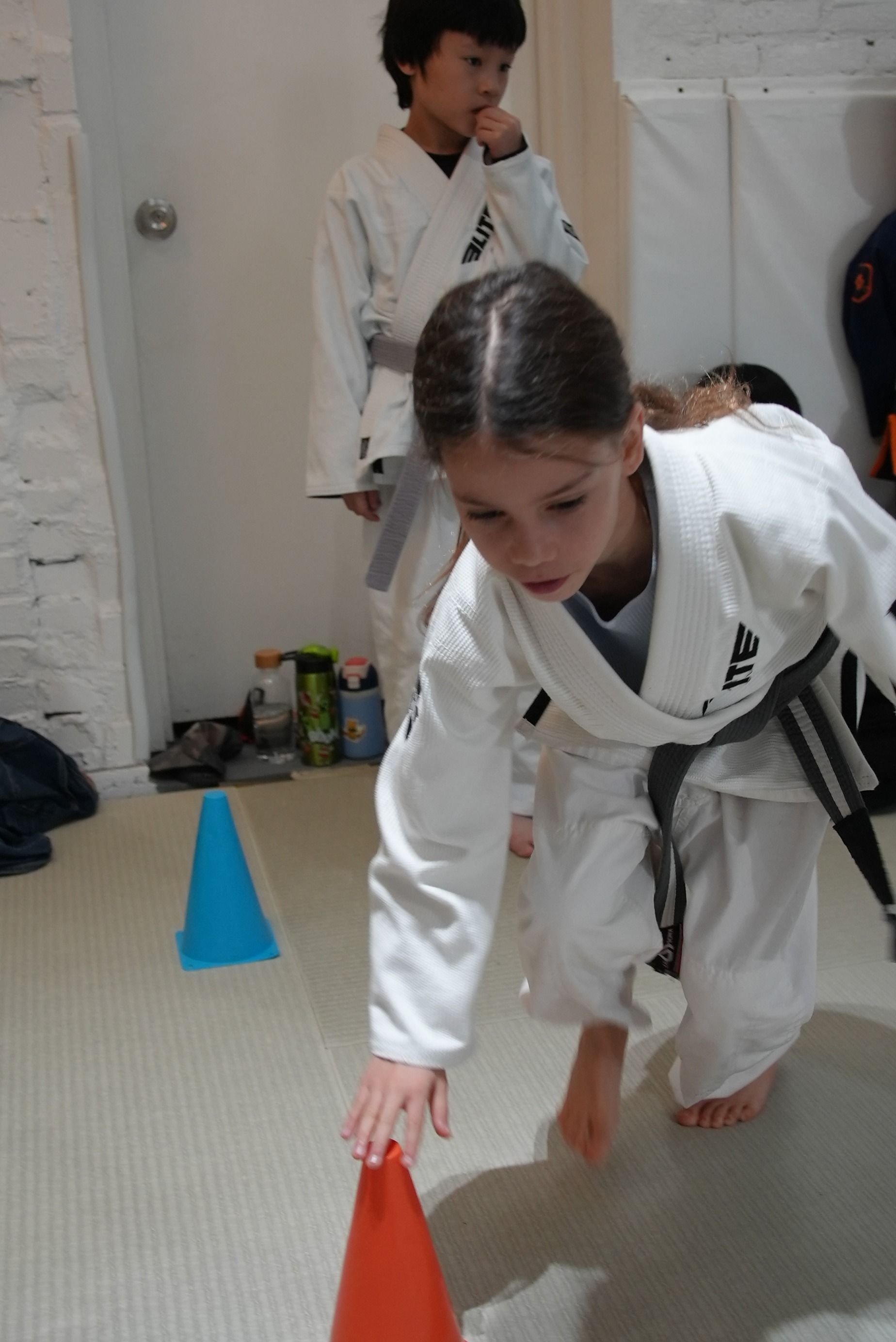
A typical 45 to 60 minute class often includes:
- a warm-up focused on movement skills like rolling, balance, and coordination
- technique instruction with clear steps and plenty of repetition
- partner drilling with coaching and safe pacing
- games or positional training that make skills feel real
- a cool-down and a quick recap so kids leave knowing what improved
We group kids by age and experience so the room stays safe and the learning stays relevant. Younger kids often need more game-based learning. Older kids and teens can handle more detail, more strategy, and more responsibility.
Getting started: ages, gear, and what parents can do to help
Youth Brazilian Jiu-Jitsu can start as early as 3 to 5 for coordination and fun. Ages 6 to 12 are often a sweet spot for building a strong foundation, and teens can take on more advanced problem-solving and leadership habits.
If you are wondering what your child needs for the first class, keep it simple:
1. Have your child wear comfortable athletic clothes if you do not have a uniform yet
2. Bring a water bottle and arrive a little early to settle in
3. Encourage your child to try, not to be perfect
4. Plan on consistency, because results come from repetition
5. Check the class schedule page so you can build a routine that actually sticks
One more small thing: your attitude matters. When kids sense that training is a positive commitment, not a punishment or a performance test, retention goes way up. We love when parents ask questions, share concerns, and stay involved at the right level.
Ready to Begin
If you want an activity that builds confidence, focus, fitness, and real-world composure, Youth Brazilian Jiu-Jitsu is one of the most complete options you can give your child in the city. The benefits show up in posture, behavior, friendships, and how kids respond when something gets hard.
Our youth programs at Range Brazilian Jiu-Jitsu NYC are designed for New York families who want structure, safety, and steady progress, with coaching that treats each child like an individual while still building strong community.
No experience is needed to begin. Join a Brazilian Jiu-Jitsu class at Range Brazilian Jiu-Jitsu NYC today.