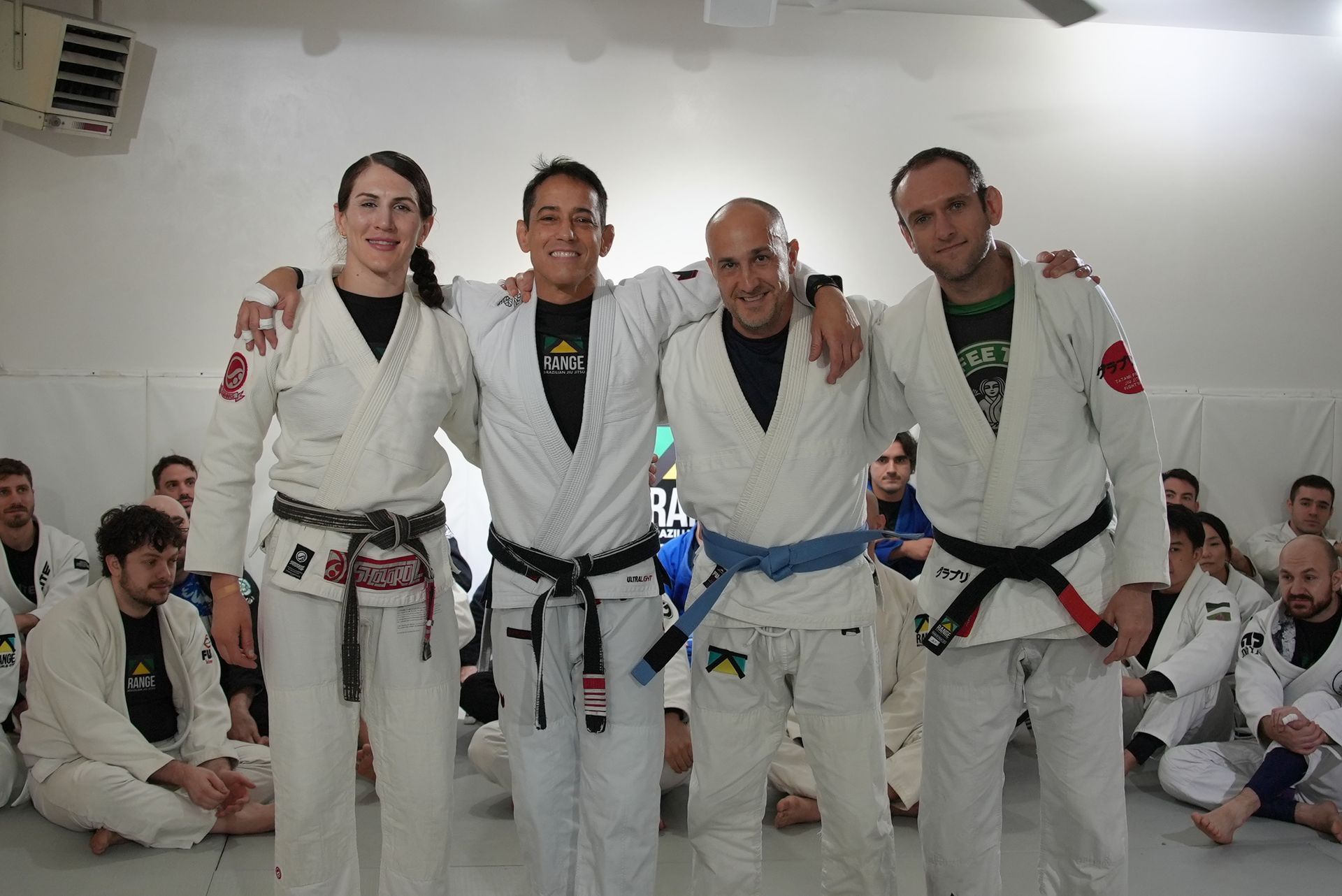
A good room and a smart plan can turn a stressful New York week into something you feel ready for.
Adult Brazilian Jiu-Jitsu has exploded in popularity for a reason: it works for real people with real schedules. Search interest in BJJ has climbed dramatically over the last two decades, and adults are the biggest group stepping onto the mats, not just for fitness but for stress relief, self-defense, and confidence that feels earned. In a city that moves fast and asks a lot, that combination matters.
We also know the other side of the story. Brazilian Jiu-Jitsu is famous for a steep learning curve, and the stats back it up: a large percentage of white belts quit early. That is not because the art is only for a certain kind of person. It is usually because the environment, expectations, and early training plan do not match what adults actually need.
Our job is to make Adult Brazilian Jiu-Jitsu in New York feel approachable, structured, and worth sticking with. You should be able to walk in as a true beginner, get coached with patience, and leave class feeling clearer, stronger, and a little more capable than you were an hour ago.
Why Adult Brazilian Jiu-Jitsu fits NYC life better than you might expect
New York can be isolating even when you are surrounded by people. Work runs late, commutes eat time, and friendships can slip into the background. Adult Brazilian Jiu-Jitsu gives you something rare: a consistent, in-person community that is built around shared effort. You do not need to be outgoing. You just need to show up.
There is also the mental side. Grappling forces attention onto what is right in front of you: posture, pressure, breathing, and problem-solving under constraints. That is why many adults describe BJJ as “moving meditation,” even if the room is loud and everyone is sweating. When you train, you cannot multitask, and that turns out to be a relief.
On the physical side, Adult Brazilian Jiu-Jitsu is a full-body workout that does not depend on being naturally fast or explosive. Technique matters more than brute strength, which is exactly why beginners over 30 can thrive. When you learn how to frame, hip escape, and keep your balance, you start winning small exchanges even before your conditioning catches up.
Confidence that comes from skill, not hype
Confidence is a slippery word. In our experience, the most useful kind of confidence is quiet. It is the feeling that you can handle discomfort without panicking, think under pressure, and keep going when the plan changes. Adult Brazilian Jiu-Jitsu builds that through repetition.
A typical beginner path looks like this: at first you are just trying to remember where your hands go and which direction to turn your hips. Then you start recognizing positions like guard, side control, and mount. After that, you notice you can survive longer, escape more often, and eventually threaten your own sweeps or submissions. None of that requires a dramatic personality shift. It is simply what happens when your body learns options.
That confidence carries into everyday life in small ways. You stand a little differently. You breathe more slowly when something annoying happens. You stop interpreting every tough moment as a crisis. Those are practical wins, especially in New York.
What “community” actually means on the mats
Community is not just people being friendly, although that helps. In Adult Brazilian Jiu-Jitsu, community is built through a very specific kind of trust. You are practicing techniques that would be dangerous if done carelessly, so you learn to take care of training partners quickly. You tap, you reset, you try again. It is cooperative even when it looks like fighting.
We structure classes so you are not thrown into chaos. You will drill with partners, ask questions, and get corrections that are meant to help you improve, not prove a point. Over time, the room starts to feel familiar, like a place where you can be a beginner without apology.
A lot of adults also like the simple consistency of it. You see the same faces a couple times a week. You start tracking each other’s progress. Someone remembers you were working on your guard retention last week and asks how it is going. That sounds small, but in a big city, small things are often the glue.
Adult Brazilian Jiu-Jitsu for beginners: what to expect in the first month
The first month is where many people decide whether BJJ is “for them.” We take that seriously because early experiences can either build momentum or create unnecessary frustration. Your first classes should feel challenging, but not confusing in a way that makes you shut down.
In your first few weeks, we focus on fundamentals that show up everywhere: base, posture, frames, and escapes. Escapes matter because feeling trapped is what spikes anxiety for most beginners. Once you learn how to protect yourself and create space, everything else becomes easier to absorb.
Here is what we want your first month to feel like:
- You understand the basic “map” of positions, even if you cannot execute everything yet
- You know how to tap, how to pace yourself, and how to train safely
- You can name a few core movements and practice them without overthinking
- You leave class tired but not wrecked, and you want to come back
That last point is not fluff. Consistency is the secret ingredient in BJJ, and we would rather you train steadily than go too hard, get sore, and disappear.
A simple retention plan that beats the white belt dropout problem
BJJ has a dropout narrative for a reason: about 70 percent of white belts quit. But that statistic is not destiny. Retention improves dramatically when adults have a clear plan, realistic expectations, and a supportive room. Many people who stay past the early phase keep training for years, and average retention for those who remain can hover around 60 percent over 12 months.
We build your training around progress you can actually notice. That means we celebrate small, measurable wins: escaping side control once per round, holding posture in closed guard, or hitting the same sweep twice in a week. Those little proof points keep motivation grounded.
If you want a practical approach, we suggest this:
1. Train two to three times per week for the first three months, instead of cramming sessions randomly
2. Pick one “survival goal” and one “attack goal” each month, so your attention has a home
3. Ask for feedback after class, then write down one correction before you forget it on the subway
4. Roll with a mix of partners, not only the toughest people in the room
5. Track consistency, not wins, because wins come later and show up quietly
This is also where community helps. When people know your name and notice you missed a week, it is easier to return. You feel less like you are starting over from zero.
Fitness and stress relief: why grappling changes your body and your head
Adult Brazilian Jiu-Jitsu builds functional strength because your body is constantly stabilizing, pushing, pulling, and rotating. You are bridging, shrimping, framing, and learning to apply pressure with leverage instead of tension. Over time, your grip improves, your hips get stronger, and your cardio adapts in a way that feels useful.
The mental benefits are not just motivational posters. A 2024 study found that 92 percent of adults training twice weekly reported improved outcomes, including fitness and wellbeing. We see similar patterns: people sleep better, feel less “wired,” and handle stress more evenly. It is not that life gets easier. It is that you get more capable.
A detail adults appreciate is that you can scale intensity. Some days you train hard. Some days you focus on drilling and technical rounds. That flexibility is important in New York, where work deadlines and life logistics can vary week to week.
Self-defense skills that feel realistic for a city environment
Self-defense is not about becoming fearless. It is about understanding distance, controlling positions, and staying calm when something goes sideways. Adult Brazilian Jiu-Jitsu teaches you how to manage common grappling scenarios: clinches, grabs, and situations where you end up on the ground.
We emphasize fundamentals that translate well:
- How to maintain balance and avoid getting pulled into bad positions
- How to frame and create space when someone is on top
- How to stand up safely from the ground, which is a big deal in real life
- How to control a situation without relying on strikes
In a dense city, awareness and decision-making are part of the skill set too. Training helps you read pressure and movement better. You start noticing when you are off-balance, rushed, or distracted, and you correct it. That is a form of confidence that shows up outside the gym.
Women in Adult Brazilian Jiu-Jitsu: comfort, safety, and progression
Women currently make up a smaller portion of BJJ practitioners, around 15.6 percent, but participation is rising and the culture is changing with it. We take creating a respectful, technically focused training environment seriously. You should feel safe asking questions, choosing partners, and learning at your pace.
Adult Brazilian Jiu-Jitsu is especially valuable for women because it teaches control and escapes against resistance, not just choreographed movements. You learn how to use frames, angles, and leverage, even when someone is stronger. And you get to test those skills in a controlled setting, which is where confidence becomes real.
If you are hesitant, that is normal. The best first step is simply attending a beginner-friendly class, meeting the coaching staff, and seeing how the room feels.
Time, gear, and what “progress” looks like in real terms
Most adults get the best results training two to three times per week. That is enough frequency to build skills without burning out. It also fits the reality of work, family, and the occasional week where New York just wins and your calendar explodes.
Gear is straightforward. A gi or a rashguard and shorts gets you started, and many gyms can help with loaner options early on. Budget-wise, NYC training often falls in the 150 to 250 per month range. We recommend checking the website for current rates and any intro options, since details can change over time.
Progress is personal, but it helps to know the general landscape. Black belt often takes years, and only a small percentage reach it. That is not discouraging, it is freeing. Adult Brazilian Jiu-Jitsu is not a race. In three to six months of consistent training, most people notice meaningful gains: better cardio, calmer decision-making, and a growing ability to handle unfamiliar positions without freezing.
Start Your Journey with Range Brazilian Jiu-Jitsu NYC
If you want Adult Brazilian Jiu-Jitsu that builds both community and confidence, we have designed our training in New York to be structured, welcoming, and realistic for adult lives. You will get coaching that prioritizes fundamentals, safe training habits, and steady progression, so you can actually enjoy the process while you improve.
When you are ready, Range Brazilian Jiu-Jitsu NYC is here to help you turn curiosity into a routine that sticks, whether your goals are fitness, self-defense, stress relief, or simply finding your people in the city.
Become part of a team that values growth and respect by joining a Brazilian Jiu-Jitsu class at Range Brazilian Jiu-Jitsu NYC.