Adult Brazilian Jiu-Jitsu can fit real NYC life if you know what to look for before your first class.
Adult Brazilian Jiu-Jitsu is having a moment, and not just online. Interest in the sport has surged for years, and it makes sense: it is one of the few workouts that also teaches you how to solve problems under pressure. In a city like New York, where schedules are tight and stress is basically a background noise, that combination matters.
We also know the first question most adults have is simple: Is this going to work for me? Not for a 19-year-old competitor with endless energy, but for you, with work, commuting, family, and the occasional sore back from sitting too long. Our answer is that Adult Brazilian Jiu-Jitsu can be an excellent fit, as long as you understand what the training feels like and how to start intelligently.
Globally, Brazilian Jiu-Jitsu has more than 5 million practitioners, and adults are the largest group joining. In the U.S., only about 20% of martial arts gyms focus on ground fighting like BJJ, yet BJJ programs tend to keep people training, with retention around 60% at the 12-month mark. That is not because it is easy. It is because it is engaging, measurable, and surprisingly practical.
What Adult Brazilian Jiu-Jitsu actually is (and what it is not)
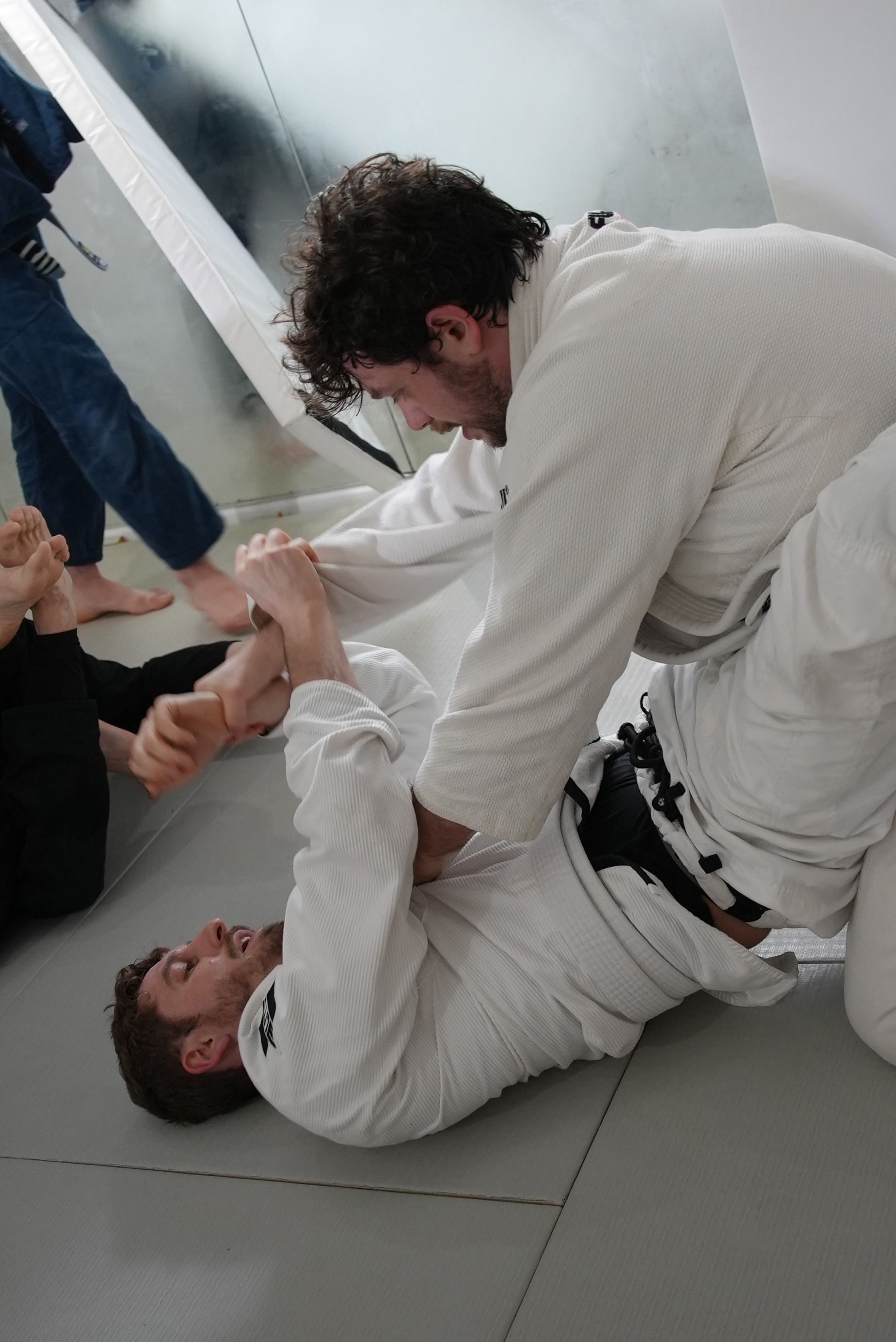
At its core, Adult Brazilian Jiu-Jitsu is grappling focused on leverage, control, and submissions. You learn how to clinch safely, take a fight to the ground when appropriate, control positions, escape bad spots, and finish with chokes and joint locks. The art rewards patience and technique more than raw strength, which is why adults can start at almost any age and still progress.
It is not a bootcamp where we yell at you until you collapse. We train hard, but we coach for longevity. It is also not a choreography class where everything works only if your partner cooperates. Training includes live, controlled sparring, which is where the lessons turn into real skill.
If you are worried you need to be athletic to begin, keep this in mind: the average new black belt age is about 32, and most people take roughly 3 to 5 years of consistent training to reach that level. Adult Brazilian Jiu-Jitsu is designed to be learned over time, not rushed.
Key factor 1: Your real goal (fitness, self defense, stress relief, or all three)
Most adults come in with one main motivation, and then end up keeping the other benefits too. In New York, three goals show up again and again: staying in shape without needing machines, learning self defense that works in close range, and finding a way to shut the brain off after a long day.
For fitness, BJJ is sneaky effective. You are moving, posting, bridging, squatting, pulling, and gripping without staring at a timer. Conditioning improves, but so does coordination and mobility, especially around hips and shoulders.
For self defense, BJJ is valuable because it addresses what happens when space disappears. NYC is crowded. Elevators, subway platforms, tight hallways, packed sidewalks, all of it reduces distance. Adult Brazilian Jiu-Jitsu helps you build calm decision-making in those close-range situations, while also teaching you how to avoid unnecessary escalation.
For stress relief, there is something very direct about grappling: you cannot answer emails while someone is trying to pass your guard. Training demands focus, and that focus tends to clear mental clutter. Many students tell us it becomes the most honest hour of their day.
Key factor 2: Your schedule and how often you can realistically train
Consistency beats intensity, especially for adults. You do not need to train every day to get results, and trying to do too much too soon is one of the most common ways people burn out.
A practical starting point for Adult Brazilian Jiu-Jitsu is 2 to 3 sessions per week. That is enough repetition to build skill, improve conditioning, and make the learning curve feel exciting rather than overwhelming. It also leaves room for recovery, which matters when you have a full life outside the mats.
We structure our class schedule to support busy adults, including people who want to train before work, after work, or on weekends. Your goal is not to be perfect. Your goal is to keep showing up.
Key factor 3: Your comfort level with contact and learning through friction
BJJ is close contact. There is no way around that. The good news is that the environment is controlled, and we teach you how to train with awareness and respect from day one.
If you are unsure about sparring, you are not alone. Many beginners start cautiously, and that is healthy. We progress you into live rounds at a pace that makes sense, focusing on safety, tapping early, and learning how to communicate. Over time, what felt intense becomes familiar. That shift is a big part of why confidence rises. One data point we see reflected in real training is that around 85% of practitioners report increased confidence after a year.
Key factor 4: Injury risk, and how to train like an adult (not a highlight reel)
The question is not whether BJJ has risk. Any sport with movement and resistance does. The better question is whether the training culture supports longevity.
We reduce risk by coaching positioning, pacing, and smart partner selection. Technique matters more than going hard. When adults get hurt, it is often because of ego, rushing, or trying to “win” practice instead of learning. We do not build training around that mindset.
Here are habits we encourage from day one because they keep you training for the long run:
• Tap early and tap often, especially while you are learning the difference between discomfort and danger
• Choose smooth rounds over explosive rounds, because control is a skill you can repeat safely
• Treat recovery like part of training, including sleep, hydration, and basic mobility work
• Ask questions in class, because confusion is where people make risky choices
• Communicate with partners about intensity, injuries, and experience level before you start
If you are coming in with old injuries, we can usually scale training. Plenty of adults start Adult Brazilian Jiu-Jitsu in New York with creaky shoulders, stiff hips, or a cranky neck. We plan around reality, not fantasy.
Gi vs no gi: Which format fits your lifestyle and goals?
In NYC, you will hear people debate gi versus no gi constantly, and we get it. Both are valuable, and both build real skill.
Gi training uses a traditional uniform that gives you grips on sleeves, collars, and pants. It slows things down in a useful way and helps beginners learn posture, frames, and pressure with more structure. It also tends to reward patience and precision.
No gi training is faster, with more emphasis on body control, underhooks, head position, and athletic scrambles. It often feels more immediately “sporty,” and it is a great match for adults who like a sweat-heavy session.
We offer both because most adults benefit from cross-training. If you are not sure where to start, we usually recommend learning fundamentals in the gi and layering in no gi as your comfort grows.
What your first month will feel like (a realistic timeline)
The first few classes can feel like learning a new language while doing yoga in traffic. That is normal. Adult Brazilian Jiu-Jitsu has positions, names, and tiny details that matter, and it takes repetition to make them stick.
A realistic first-month experience often looks like this:
1. Week 1: You learn how class works, how to tap, how to move on the mat, and a few core positions
2. Week 2: You start recognizing patterns, like guard, side control, mount, and back control
3. Week 3: You feel more comfortable sparring lightly, even if you still “lose” most rounds
4. Week 4: You notice small wins, like escaping once, holding a position, or staying calmer
Those small wins are the point. Progress in Adult Brazilian Jiu-Jitsu is not always dramatic, but it is real and it adds up.
Is Adult Brazilian Jiu-Jitsu in New York beginner-friendly if you are over 30?
Yes. Most adults do not start as athletes, and plenty start over 30, over 40, and beyond. One of the underrated benefits of BJJ in New York is that you train with a wide mix of people: professionals, parents, creatives, lifelong athletes, and total beginners. That mix keeps the room grounded.
We also coach with an adult lens. That means we care about your joints, your work week, and your ability to come back tomorrow. You can train hard and still train smart.
Women’s participation is growing fast as well, now around 15.6% of participants and up roughly 70% over the last decade. That growth has pushed the culture toward more inclusive coaching, clearer boundaries, and better beginner onboarding, all of which helps everyone.
The NYC factor: Why BJJ fits this city in a very practical way
New York has a specific kind of pressure. People walk fast, work long hours, and carry stress in their shoulders like it is part of the outfit. Adult Brazilian Jiu-Jitsu gives you a physical outlet, but it also teaches composure. You learn how to breathe while pinned, how to make decisions while tired, and how to stay steady when someone is resisting you.
Those skills transfer. You may notice you react differently to crowded trains, uncomfortable conversations, or tense moments at work. Not because you are looking for conflict, but because you have practiced staying calm in uncomfortable positions.
BJJ in New York is also convenient in a low-equipment way. You do not need machines. You do not need a perfect sunny day. You show up, train, and leave feeling like you did something real.
What to bring, what to wear, and what you can skip overthinking
New students often over-prepare. We appreciate the energy, but you can keep it simple.
If you are training gi, you will want a gi and a belt. If you are training no gi, you will want a rash guard and grappling shorts. For your first class, we can help you figure out what makes sense, and we offer gear guidance and rentals so you do not have to buy everything blindly.
Bring water, flip-flops for off the mat, and a willingness to be new at something. That last part matters more than the perfect bag setup.
How we coach adults: Structure, clarity, and room to grow
Our adult program is built around fundamentals first, then layering complexity as you improve. We teach technique with clear details, give you time to drill, and help you connect movements to real sparring scenarios. You will not just collect moves. You will learn why they work and when to use them.
We also respect different motivations. Some adults want to compete locally. Some want self defense skills and better fitness. Some want a mental reset after work. We coach all of that, and we keep the room supportive so beginners can learn without feeling like they have to prove anything.
If your goal is adult Brazilian Jiu-Jitsu in New York that you can sustain, our job is to make training feel challenging but doable, week after week.
Take the Next Step
If you want a clear answer on whether Adult Brazilian Jiu-Jitsu fits your body, schedule, and goals, the fastest way is to try a class in person and feel the pace for yourself. We keep the experience structured, beginner-friendly, and grounded in fundamentals so you can build skill without getting lost.
When you are ready, Range Brazilian Jiu-Jitsu NYC is here to help you start with a plan, not guesswork. Whether your priority is fitness, self defense, or a healthier way to handle NYC stress, we will meet you where you are and help you progress.
If you’re curious about Brazilian Jiu-Jitsu training, join a class at Range Brazilian Jiu-Jitsu NYC and learn from the ground up.