A focused hour on the mats can calm your nervous system more than another NYC coffee run ever will.
Life in New York runs hot: crowded trains, packed calendars, constant noise, and that feeling that you should be doing one more thing. When people look for stress relief, the usual answers are more sleep, more stretching, fewer screens, and sure, those help. But for many students, Brazilian Jiu-Jitsu becomes the first wellness habit that actually sticks because it is hard to multitask while someone is trying to control your hips.
We see it every week: you walk in carrying the city on your shoulders, and you walk out lighter, steadier, and a little more present. Brazilian Jiu-Jitsu is physical, but what surprises most beginners is how quickly it becomes mental hygiene. Your attention has a job to do, and stress does not get to ride along for free.
In this guide, we will break down how training supports stress relief and whole-body wellness in NYC, what you can expect as a beginner, and how our class structure helps you progress without burning out.
Why Brazilian Jiu-Jitsu Works for Stress Relief in New York
Stress is not just a feeling. It shows up as tight jaws, shallow breathing, poor sleep, and that wired-but-tired loop that can feel normal in New York. Brazilian Jiu-Jitsu interrupts that loop because it demands focus, controlled effort, and real-time problem solving, all while your body gets the movement it has been asking for.
BJJ is also measurable. You can feel improvement from week to week, and that matters when everything else in the city feels abstract or endlessly “in progress.” Even small wins, like escaping side control or remembering a grip sequence, give your brain evidence that you are adapting and improving.
And the community element counts. Training partners learn your pace, you learn theirs, and the room starts to feel like a consistent anchor in a city that changes fast.
The Science of “Mat Time”: Nervous System Reset Through Training
Focus replaces rumination
One reason Brazilian Jiu-Jitsu is so effective for stress relief is that it forces single-tasking. When you are drilling a guard pass, you are not rehearsing tomorrow’s meeting. When you are sparring, you are reading pressure, frames, and timing. That level of attention pulls your mind out of rumination and into the present moment.
We coach this deliberately. You will hear reminders to breathe, slow down, and solve the problem in front of you. Over time, students start carrying that skill off the mats: noticing tension earlier, responding instead of reacting, and recovering faster after a stressful moment.
Intensity with control, not chaos
New Yorkers often assume combat sports equal adrenaline and aggression. Good training is different. Yes, you will work hard, but the goal is controlled intensity, with clear rules and a culture of tapping early and respecting partners. That combination lets you experience challenge without feeling unsafe, which is a powerful recipe for resilience.
Movement that hits what “sitting life” misses
A lot of NYC work is seated work. Brazilian Jiu-Jitsu moves your spine, hips, shoulders, and neck through patterns most gyms do not touch: shrimping, bridging, framing, posting, rotating, and stabilizing under load. It is not just exercise; it is movement education. Students regularly notice improved posture, fewer nagging tight spots, and better body awareness in daily life.
Wellness Benefits You Can Feel: What Changes After a Few Weeks
Not every benefit shows up as a dramatic transformation. Many are subtle at first, then obvious later. Here are a few changes students commonly describe as training becomes consistent:
• Better sleep quality because your body has done honest work and your mind has had a break from constant inputs
• Improved mood and patience because stress has an outlet and you are practicing calm under pressure
• Stronger core and grip strength without obsessing over sets and reps
• A sense of progress through clear milestones, which helps motivation in a city where routines can be fragile
• More confidence in close-contact situations, including basic self-defense awareness and composure
Nationally, Brazilian Jiu-Jitsu has grown fast, with search interest up more than 100 percent since 2004 and hundreds of thousands of practitioners in the US. That growth is not just about sport. People stick with BJJ because it gives both structure and relief.
NYC Reality: Why Grappling Feels Practical Here
In New York, personal space is not guaranteed. Sidewalks squeeze, trains jostle, and crowded places are normal. From a self-defense perspective, many real-world altercations end up tied up and off-balance, where grappling skills matter. We keep training grounded in the idea that technique should help you manage pressure, escape bad positions, and stay calm enough to make smart decisions.
This “practical calm” is also a wellness benefit. Stress is pressure. Grappling teaches you to identify pressure, create space, and recover. It is a physical metaphor that becomes a real skill.
What a Beginner Class Actually Feels Like
Walking into your first Brazilian Jiu-Jitsu class can feel like stepping into a new language. That is normal. Our job is to make the entry point clear and manageable, so you can learn without feeling thrown into the deep end.
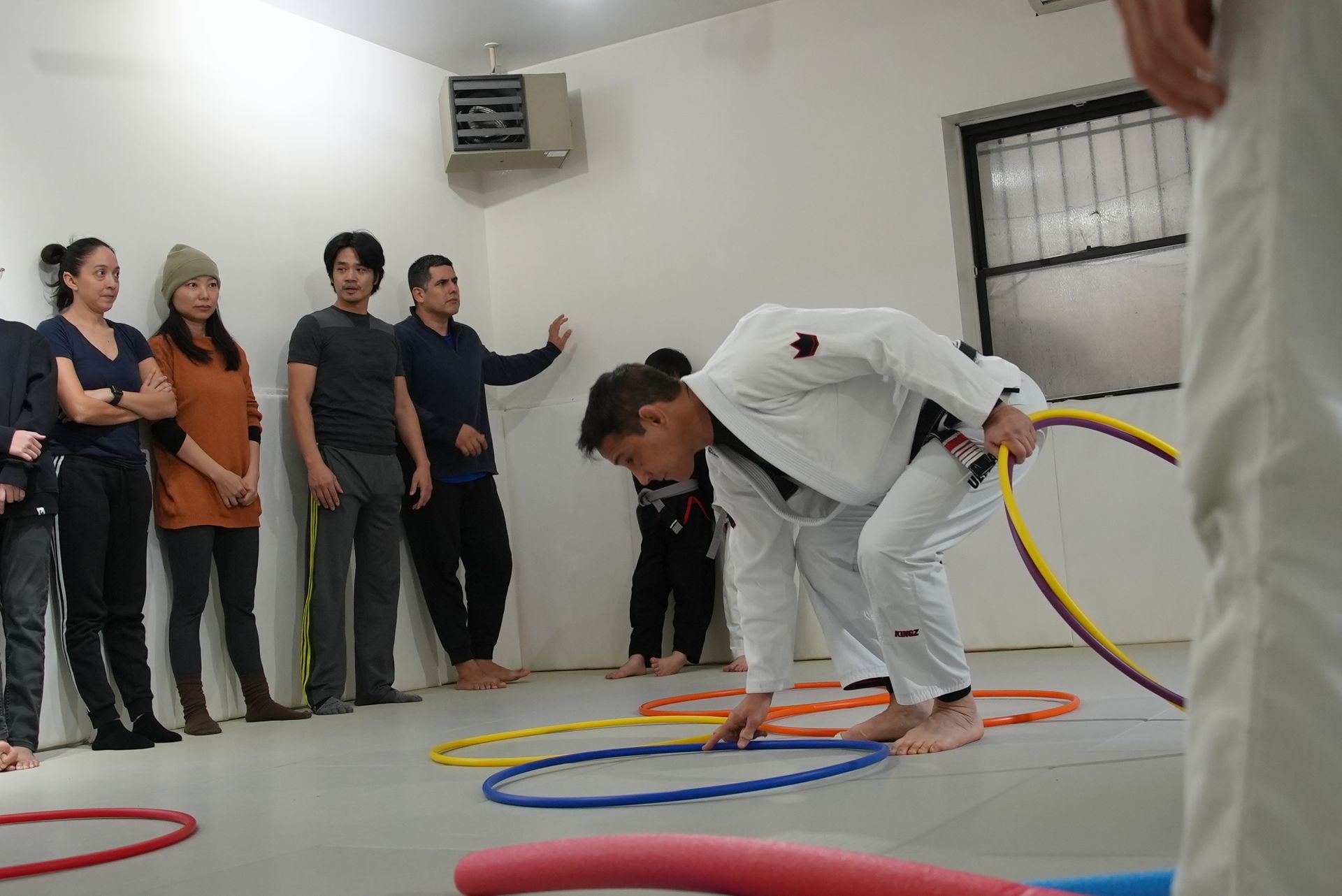
A typical beginner-friendly session usually includes a warm-up that prepares your joints for grappling, technical instruction with a few key details (not a hundred), drilling with a partner, and then controlled rounds depending on the class. You will sweat, but you will also think.
You do not need to “get in shape first.” Training is how you get in shape. We would rather you start where you are and build steadily than wait for some perfect moment that never shows up.
Progress That Reduces Stress: Belts, Milestones, and Motivation
One underrated wellness factor in Brazilian Jiu-Jitsu is the way it tracks progress. Many fitness routines fail because results are vague. In BJJ, progress is tangible: you learn an escape, you hit it live, you earn a stripe, you survive a tougher round, you notice you are breathing instead of panicking.
On average, the time to black belt is around nine years. That sounds long until you realize it is the point: it becomes a long-term practice, not a short-term fix. Most beginners set a simpler goal, like showing up consistently for a few months or working toward the early ranks. Even reaching blue belt often takes a couple of years, and that timeline can be motivating because it rewards patience.
In New York, monthly dues tend to be among the highest in the country, averaging around 173 dollars. The value comes from what you get back: coaching, community, structured progress, and a practice that supports both self-defense and wellness.
Our Approach to Stress-Smart Training
We build classes around skills that create control and confidence without beating you up. That means we emphasize fundamentals, clean technique, and training partners taking care of each other. Hard rounds have a place, but they are not the only tool, and they are not the entry point.
What we prioritize in day-to-day training
1. Safety first: tapping early, controlled pace, and clear expectations so you can train for years
2. Fundamentals that scale: posture, base, frames, escapes, and positional control before flashy sequences
3. Problem solving: understanding why a technique works so you can adapt under pressure
4. Conditioning that comes from grappling, plus simple recovery habits like mobility work after class
5. Consistency over intensity: the best stress relief comes from showing up, not from one “hero” workout
This structure is also why many students who never loved traditional gyms find a home in Brazilian Jiu-Jitsu. There is always something to learn, and learning is motivating.
Youth Brazilian Jiu-Jitsu in New York: Wellness, Confidence, and Character
Parents often ask if youth Brazilian Jiu-Jitsu in New York is appropriate, especially in a city where kids are already overstimulated. Done right, it is one of the healthiest activities we can put in a child’s week. It burns energy, teaches body control, and builds confidence in a way that feels earned, not handed out.
Our youth classes focus on clear rules, respectful behavior, and age-appropriate technique. We care about character as much as skills: listening, patience, teamwork, and learning how to handle frustration without melting down. Those are life skills, and in NYC, they are priceless.
For kids who feel anxious, BJJ can provide a grounded routine. For kids who are bursting with energy, it provides structure. For kids who struggle socially, it offers a way to connect through shared practice. And for families, it becomes a steady rhythm: class, progress, and a community that feels familiar.
How to Start Without Overthinking It
Starting Brazilian Jiu-Jitsu in New York should feel simple. You do not need to memorize moves from videos or buy a closet of gear. You just need to show up willing to learn, ask questions, and move at a sustainable pace.
If you are nervous about sparring, tell us. If you have old injuries, tell us. We can help you adjust training intensity, choose safe partners, and build confidence gradually. The goal is not to prove something on day one. The goal is to build a practice that makes your week better.
Take the Next Step
If you want a stress relief routine that is active, social, and genuinely engaging, Brazilian Jiu-Jitsu gives you a rare mix of physical challenge and mental quiet. Building that habit in New York is easier when you have structure, clear coaching, and a class schedule that fits real life.
We built our programs at Range Brazilian Jiu-Jitsu NYC to support sustainable progress, from first-day fundamentals to long-term skill development, including Brazilian Jiu-Jitsu in New York for adults and youth Brazilian Jiu-Jitsu in New York for families who want a healthy, confidence-building activity.
Build real grappling skills and improve your technique by joining a Brazilian Jiu-Jitsu class at Range Brazilian Jiu-Jitsu NYC.