A good kids’ class does more than burn energy, it teaches attention, follow through, and calm under pressure.
In New York, distractions come fast. School days are long, screens are everywhere, and many kids bounce from one activity to the next without a real reset. That is why Youth Brazilian Jiu-Jitsu can be such a strong fit for city families: it gives your child a structured place to practice focus in a way that feels physical, social, and honestly pretty fun.
We also like how practical the learning is. In kids’ classes, focus is not an abstract idea. Your child has to listen, remember steps, control their body, and work with a partner safely. Over time, that training can support classroom habits like paying attention, following directions, and completing tasks, which are all connected to better school performance.
This article breaks down how Youth Brazilian Jiu-Jitsu in New York can support focus and grades, what a beginner class typically looks like, and how you can help your child get the most out of training without turning it into another pressure point.
Why focus is the real superpower behind better grades
Grades usually improve when the underlying skills improve. For most kids, that means stronger executive function: attention control, impulse control, planning, and staying with something even when it gets challenging. We think Youth Brazilian Jiu-Jitsu is effective because it trains those skills in real time.
A typical kids’ class is full of small attention challenges. Your child has to watch a demonstration, copy it, and adjust based on feedback. That loop builds concentration and short-term memory. If your child zones out, the technique stops working. The outcome is immediate, but it is not harsh. It is just a clear signal: pay attention, try again.
Over weeks and months, that routine can carry over into school. We never promise that training automatically equals higher grades, because academics depend on many factors. But we do see that consistent practice can support the behaviors that make good grades more likely: listening the first time, staying calm when frustrated, and finishing what was started.
The classroom habits BJJ trains without feeling like homework
Kids sometimes resist anything that feels like more school. One reason Youth Brazilian Jiu-Jitsu works is that it sneaks the same life skills into a different environment, with movement and a clear structure.
Here are classroom habits we intentionally reinforce on the mat:
• Following multi-step directions, because techniques have sequences that only work when you do each piece in order
• Waiting your turn and respecting space, because partners need safety and instructors need attention during demos
• Self-correction after feedback, because we coach details like posture, grips, and control in the moment
• Calm problem-solving, because grappling is about thinking under pressure rather than panicking
• Consistent effort, because progress comes from repetition, not a one-time “perfect” day
That last one matters in NYC. Kids feel pressure early here. Having an activity where improvement is measurable and earned can be a relief, even for high achievers.
Why NYC kids benefit especially from structure
New York is exciting, but it can be overstimulating. Your child may be navigating crowded hallways, noisy classrooms, busy commutes, packed after-school calendars, and screens that never stop calling for attention. In that setting, structure is not “extra.” It is support.
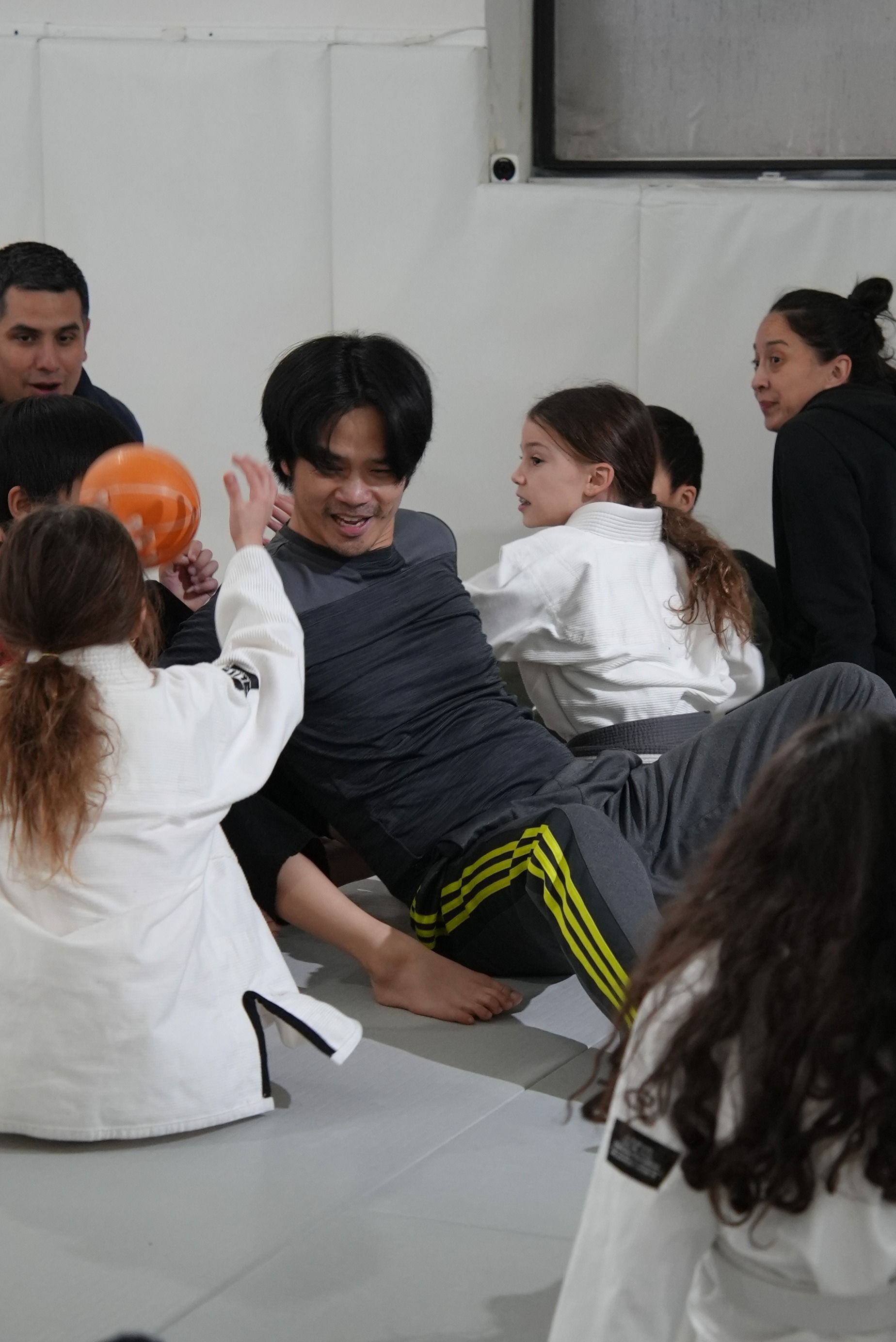
In our youth program, structure shows up in predictable ways: lining up, listening cues, partner drills, and clear start and end points. That rhythm helps your child settle. Many parents tell us training becomes an after-school reset, a place where kids can move their bodies, get guided, and leave feeling more regulated than when they arrived.
We also keep classes age-appropriate. Younger kids need shorter segments and more movement variety. Older kids can handle longer technical instruction and more controlled sparring. Matching the class style to attention span is a big part of making focus actually improve, instead of turning class into chaos.
How Youth Brazilian Jiu-Jitsu builds focus step by step
Focus is not one skill. It is a stack of smaller skills, and BJJ touches many of them in a single class.
Attention control: learning to watch, then do
Each technique starts with observation. Your child has to track grips, foot placement, and timing. Then we have students try it, usually in short rounds, so attention stays active rather than passive.
We also build “quiet eyes,” meaning your child learns to look at the key details, not every detail. That is a real academic skill too, especially for reading comprehension and math procedures.
Impulse control: moving with control, not speed
A lot of kids think “martial arts” equals going fast. In grappling, speed without control usually fails. We coach kids to slow down, breathe, and apply technique with balance. That is impulse control in action.
For a child who blurts out answers, rushes through homework, or reacts quickly when frustrated, this kind of practice can be valuable. It gives a physical context for patience.
Working memory: holding a sequence in mind
Many techniques have steps. Your child has to remember what comes next while also managing their body and their partner. That is working memory, and it is closely related to classroom performance.
When kids repeat a sequence many times, they also learn something else: repetition is not punishment. It is how skills become automatic.
Emotional regulation: staying calm when it is hard
BJJ includes challenge by design. Your child will get stuck sometimes. That moment is where growth happens. We coach kids to pause, reset, and keep thinking. The ability to recover from frustration is a major driver of academic resilience, especially during tests, presentations, and difficult assignments.
Safety, supervision, and why BJJ is not “fighting”
Parents in New York often ask the same question first: Is this safe?
We take that seriously. Youth Brazilian Jiu-Jitsu is a grappling art with no striking in class. That means kids are learning control, positions, and escapes, not punches and kicks. We also keep training age-appropriate and closely supervised.
Safety comes from a few consistent practices:
• Clear rules about behavior, partner respect, and stopping when instructed
• Technique progressions that start with basics before live training increases
• Controlled drilling where kids learn how to apply movement safely
• Instructor oversight so intensity stays appropriate for the group
• A culture that treats training partners as teammates, not opponents
As with any sport, bumps can happen. But the goal of our kids program is skill-building, confidence, and discipline in a supportive environment.
What ages can start, and how classes are typically structured
Many families start Youth Brazilian Jiu-Jitsu as early as preschool age, and continue through the teen years. The key is not just age, but readiness for group instruction. Some kids are ready at 4. Some are more comfortable at 6. We help you make that call based on attention span, comfort with new spaces, and willingness to take direction.
A typical beginner-friendly class usually includes:
• A quick warmup that builds coordination, balance, and body awareness
• A small set of core techniques, taught with clear demonstrations
• Partner drilling with coaching and corrections
• Controlled games or positional rounds that reinforce the lesson
• A short wrap-up that reinforces listening and respect
That structure is one reason Youth Brazilian Jiu-Jitsu in New York fits busy schedules. You know what you are getting each week: consistency.
How often should kids train to notice changes?
Consistency matters more than intensity. Most kids do best with a routine that is realistic for your family schedule. In a city like New York, that matters. A program only works if you can actually attend.
If your child trains once in a while, it can still be enjoyable, but changes in focus and behavior usually come from repetition. When kids attend regularly, we often see improved listening, better body control, and more confidence in group settings. Those shifts can show up at home first, like fewer reminders needed to start homework or a calmer response to frustration.
If you are aiming for the focus benefits of Youth Brazilian Jiu-Jitsu, we generally recommend starting with a steady weekly rhythm and adjusting after the first month once you see how your child responds.
How BJJ supports kids who are energetic, distracted, or shy
Not every kid walks into a martial arts class ready to jump in. We plan for that.
For high-energy kids
We give them a productive outlet that still has boundaries. The “rules” are not random. They are built into the activity: listen for the cue, move with control, respect your partner. Over time, many energetic kids learn they can be powerful and calm at the same time.
For easily distracted kids
BJJ gives immediate feedback. If attention drifts, the drill breaks. That makes focus feel relevant, not abstract. We also break instruction into short segments so kids can reset and re-engage.
For shy or anxious kids
We do not force loud personalities. We build comfort through predictable routines, partner work, and small wins. Shy kids often thrive because progress does not require being the most outgoing. It requires showing up and practicing.
Bullying, confidence, and the “quiet confidence” effect
We never want training to turn kids into aggressors. Our goal is the opposite: self-control, awareness, and confidence.
Youth Brazilian Jiu-Jitsu can support anti-bullying in a few ways. First, it improves posture and presence, which can change how a child carries themselves. Second, it teaches boundary-setting and personal space in a very concrete way. Third, it gives kids the experience of dealing with pressure without freezing.
Confidence also helps academically. When kids believe they can figure things out, they raise their hand more, participate more, and recover faster from mistakes. That mindset is a big deal in school, especially in competitive environments.
What to expect in your child’s first class
A first class should feel welcoming and organized, not intimidating. We keep beginners moving, but we also keep instruction clear and paced.
Here is a simple way to prepare so your child can focus:
1. Check the class schedule so you can arrive a little early and avoid a rushed entrance
2. Bring comfortable training clothes and a water bottle, and keep accessories at home
3. Let your child know the goal is to listen and try, not to be perfect
4. Expect your child to feel a little tired afterward, in a good way
5. After class, ask what they learned and what felt challenging, then keep it light
That “keep it light” part is important. When kids feel supported instead of evaluated, they stick with it, and consistency is where the benefits live.
Take the Next Step with Range Brazilian Jiu-Jitsu NYC
If you want an activity that supports school success without feeling like more school, our Youth Brazilian Jiu-Jitsu program is designed to build focus, discipline, and confidence through structured training that kids actually enjoy. We coach the small habits that matter: listening, patience, self-control, and steady effort.
Range Brazilian Jiu-Jitsu NYC makes it simple to start, whether your child is brand new to sports or already active and just needs a better routine. When you are ready, the website and the class schedule can help you choose a time that fits your week.
Support your child’s personal growth on and off the mats with training at Range Brazilian Jiu-Jitsu NYC.