Youth Brazilian Jiu-Jitsu gives kids a place to practice calm, courage, and good decisions, even on hectic New York days.
In New York, childhood can feel fast. School expectations, packed sidewalks, long days, and constant stimulation can leave kids either amped up or shut down, sometimes both in the same afternoon. That is exactly why Youth Brazilian Jiu-Jitsu works so well here: it creates structure, movement, and a clear set of social rules kids can actually practice, not just hear about.
In our youth program, we see leadership take shape in small moments. A student pauses, breathes, and tries again instead of melting down. A training partner gets encouragement instead of blame. A shy kid raises a hand to ask a question. Those don’t look like “leadership” at first, but give it a few months and you’ll start noticing the change at home and at school.
Youth Brazilian Jiu-Jitsu is also practical in the way New York parents tend to appreciate. It replaces extra screen time with focused physical training, it gives kids a reliable routine, and it builds a kind of confidence that is quiet, not flashy.
Why leadership starts on the mats, not with a speech
Leadership is usually described like it’s a personality trait. In real life, it behaves more like a skill set: awareness, emotional control, responsibility, and the ability to communicate under pressure. On the mats, those skills show up naturally, because the environment demands them in a safe, coached way.
Brazilian Jiu-Jitsu is problem-solving with your whole body. Kids have to pay attention, process feedback, and adjust. They learn quickly that forcing things rarely works for long. The best results come from calm thinking, steady effort, and respect for the person in front of you.
That is why Youth Brazilian Jiu-Jitsu in New York can be such a strong fit. City kids are already navigating crowded spaces and big social dynamics. Training gives them a structured place to practice composure, boundaries, and self-control while still getting to be kids.
The life skills that tend to transfer into school and home
We often hear from parents that training shows up outside the academy in ways they didn’t fully expect. It might be better focus during homework, fewer emotional spikes after a frustrating day, or a child who is more willing to take responsibility without a long back-and-forth.
There is also real data supporting these outcomes. In a published discussion of BJJ participants, 96.4 percent agreed or strongly agreed that BJJ improved confidence, 87.5 percent said it minimized anxiety, and 92.8 percent said it strengthened commitment. The same discussion highlighted the community effect and how “life skills learned on the mats” carry into daily life. Those numbers line up with what we see when students stick with training consistently.
Here are a few leadership-oriented skills we build directly through Youth Brazilian Jiu-Jitsu:
• Composure under pressure, because techniques work best when breathing and posture stay steady
• Respectful communication, because training partners need cooperation to learn safely
• Resilience, because everyone taps, everyone gets stuck, and progress still happens
• Accountability, because effort shows immediately in movement, balance, and focus
• Teamwork, because partner drilling creates shared goals, not solo performance
What progress looks like at different ages
Not all kids develop the same way, and honestly, that’s a good thing. Our coaching focuses on age-appropriate milestones, so you can see progress without needing your child to become “super competitive” just to feel successful.
Little Warriors (ages 5 to 9): confidence through structure and play
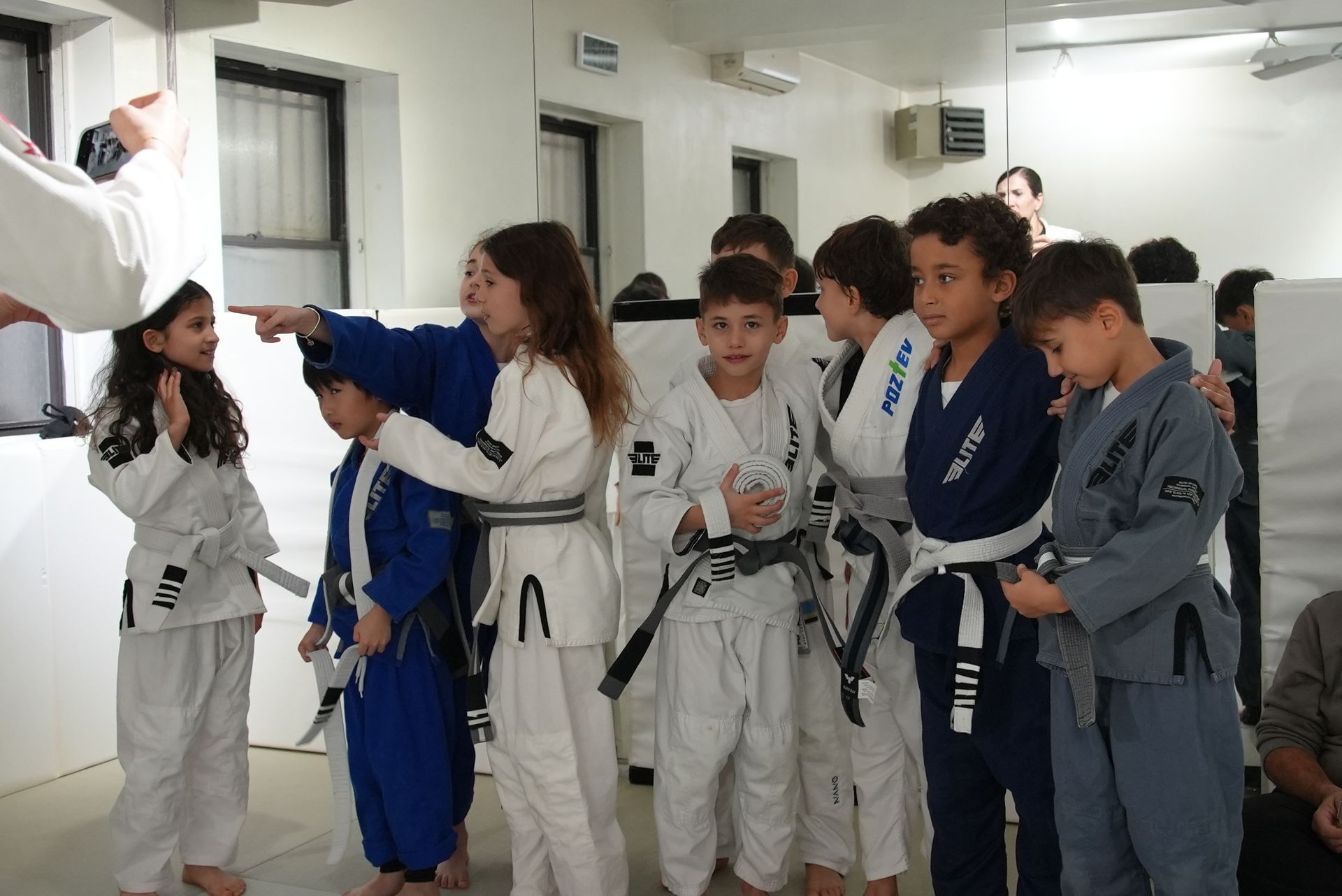
For younger kids, attention span and emotional regulation are the big wins. Our Little Warriors program uses clear routines, simple goals, and lots of repetition, but it still feels like being a kid. The structure is consistent: line up, warm up, learn technique, drill with a partner, and finish strong.
At this age, Youth Brazilian Jiu-Jitsu builds leadership through basics that sound simple but matter a lot in NYC life: listening the first time, keeping hands to yourself, taking turns, and using your voice respectfully. Parents commonly tell us they notice improvements in behavior, focus, and self-esteem once training becomes part of the weekly rhythm.
Typical early milestones include remembering positions by name, learning how to fall and move safely, and gaining the confidence to participate fully instead of hanging back.
Teen Warriors (ages 10 to 13): leadership, identity, and resilience
The pre-teen and early teen years are where leadership training really becomes visible. Kids at this stage care about social standing, fairness, and independence. Our Teen Warriors program channels that energy into discipline, respect, teamwork, and resilience, while still keeping the room supportive and structured.
Youth Brazilian Jiu-Jitsu helps teens learn how to handle discomfort without panicking. They learn how to stay calm when a plan fails, how to ask for help without embarrassment, and how to accept coaching without taking it personally. That is a leadership skill, even if it starts as “just training.”
Progress here often looks like better decision-making under pressure, stronger boundaries, and a steadier sense of self. It’s not loud. It’s more like a teen who stands a little taller and handles frustration with less drama.
Safety in kids BJJ: what parents should know in New York
A fair question we get is, “Is BJJ safe for kids?” The honest answer is that safety depends on supervision, coaching quality, and age-appropriate training design. That’s why we run structured classes, match kids by age group, and prioritize controlled drilling before any higher-intensity training.
Youth Brazilian Jiu-Jitsu is not “kids fighting.” In our classes, students learn technical movement, balance, grips, escapes, and positional control. We teach tapping early, reinforce respect constantly, and keep partners coached and monitored. When sparring is introduced, it’s progressive and supervised, and we adjust intensity to the student, not the other way around.
If you’re a New York parent, you also care about practical safety outside the academy. Training supports awareness, posture, and confidence, which can reduce the likelihood of your child being targeted socially. We focus on keeping kids grounded and respectful, not aggressive.
How often should your child train each week?
Consistency matters more than intensity. For many families, two classes per week is the sweet spot: frequent enough to build skill and routine, but not so much that it adds stress to an already packed calendar.
Here is a simple approach we recommend:
1. Start with one to two classes per week for the first month to build comfort and consistency
2. Move to two to three classes per week once your child knows the class flow and feels excited to participate
3. Keep at least one rest day between harder sessions, especially for growing kids juggling school and sports
4. Use the class schedule page to choose times that feel realistic, not aspirational
5. Reassess every couple of months, because school seasons and energy levels change
With Youth Brazilian Jiu-Jitsu, the best schedule is the one your family can maintain without turning training into another stress point.
Gi vs No-Gi, kids vs teen: what those class types actually mean
New families sometimes feel confused by terms, so we like to keep it straightforward. “Kids” and “teen” classes are age-based. “Gi” and “no-gi” are uniform-based training styles.
In gi classes, students wear a traditional uniform and learn grips and control using the jacket and pants. It slows things down a bit and helps many kids focus on posture and technique. In no-gi classes, students wear athletic gear and learn the same core concepts with different grips and movement patterns.
Both formats can support leadership development. The bigger factor is consistency and coaching, not the label on the class.
Joining mid-season and starting as a total beginner
You don’t need a “perfect” start date. Kids can join as beginners even if other students have been training for a while. We teach in layers, so a new student learns the fundamental movements first, then builds complexity as comfort grows.
What we look for is not prior experience, but readiness to follow directions and try. If your child is nervous, that is normal. If you’re nervous, also normal. The first class is often the hardest simply because it’s new, but that passes quickly once your child realizes the room is structured and supportive.
We also offer a free trial class, which makes the first step feel a lot lighter. You get to see the space, meet us, and watch how we coach before committing.
Why this matters specifically in Manhattan life
New York can be a lot for kids: crowded commutes, busy schools, and social pressure that starts earlier than many parents expect. A structured activity close to home can make the week feel more stable, especially after school when energy and emotions can spike.
Our academy is on the Upper East Side at 328 E 61st St, which makes Youth Brazilian Jiu-Jitsu in New York easier to fit into real schedules. For many families, convenience is not a luxury, it’s the difference between showing up consistently and dropping off after a few weeks.
Leadership development doesn’t require a giant time commitment. It requires repetition in the right environment, with coaches who keep standards high and encouragement steady.
Take the Next Step
If you want a youth activity that builds confidence, discipline, respect, teamwork, and resilience, we’ve designed our youth programs to deliver those results in a way that fits New York families. Range Brazilian Jiu-Jitsu NYC brings together age-based classes, structured coaching, and a community where kids learn how to lead by practicing the habits that leadership is made of.
If you’re exploring Youth Brazilian Jiu-Jitsu for your child, we encourage you to use the free trial as your starting point, check the class schedule, and see how quickly the training clicks once your child is on the mats at Range Brazilian Jiu-Jitsu NYC.
Build strength, discipline, and confidence through Jiu-Jitsu training at Range Brazilian Jiu-Jitsu NYC.