Brazilian Jiu-Jitsu can feel intimidating at first, but with the right roadmap, your first 90 days can be the most motivating training you have ever done.
Starting Brazilian Jiu-Jitsu in New York can feel like stepping into a new language, a new workout, and a new social setting all at once. We get it. NYC moves fast, and when you finally carve out time for yourself, you want a program that is organized, safe, and actually beginner-friendly.
The good news is that Brazilian Jiu-Jitsu rewards consistency more than raw athleticism. You do not need to be in perfect shape or have a “fighter” personality to belong on the mat. You need a plan, a few basic habits, and a room where beginners are coached like beginners, not thrown into the deep end.
BJJ is also booming for a reason. Around 6 million people practice worldwide, and participation in the U.S. has surged over the past decade. With New York’s average monthly dues hovering around 173, value matters here. Our job is to make your training time count by giving you structure, clear progress markers, and coaching that keeps you moving forward.
What Brazilian Jiu-Jitsu Really Is (And What It Is Not)
Brazilian Jiu-Jitsu is a grappling art built around leverage, control, and problem-solving under pressure. You learn how to manage distance, off-balance someone, improve position, and finish with submissions in a controlled way. For beginners, that usually starts with escaping bad spots and learning how to stay safe while you learn.
What it is not: a brawl, a toughness contest, or a place where you should “power through” pain. We treat training like a skill practice, not a fight night. The goal is for you to leave class feeling worked, a little humbled (that part is normal), and excited to come back tomorrow.
If you are here for fitness, BJJ delivers a full-body workout without requiring you to stare at a treadmill. If you are here for self-defense, you will learn how to stay calm and make practical decisions when someone is close enough to grab you. And if you are here because you want a new hobby that does not feel like another screen, you will probably like the way the room feels: focused, present, and very human.
Why Beginners Thrive Faster With a Structured NYC Approach
New York schedules are real. Commutes, late meetings, cramped apartments, and unpredictable weeks can make consistency tough. That is why we build training around repeatable fundamentals you can plug into your life, not a random “technique of the day” experience that leaves you guessing.
We also coach with NYC realities in mind. If you are carrying a bag all day, sitting at a desk, or walking miles, your hips, neck, and shoulders can be tight before you even warm up. We treat warm-ups as preparation, not punishment, and we emphasize movement patterns that reduce wear and tear over time.
Retention is a known challenge in the sport, especially when beginners do not have a clear path. We counter that by giving you simple milestones to track: improved breathing in bad positions, better framing, cleaner hip escapes, and more control over pace. Those are small wins, but in the first few months, small wins are everything.
Your First Class: What to Expect and How to Prepare
Your first class should feel welcoming and organized. We start by orienting you to the space, basic etiquette, and what the class will look like. You will drill technique with a partner, ask questions, and take breaks when you need them. You will not be expected to know anything beforehand.
A quick note on nerves: most beginners feel awkward at first. That is not a personal flaw, it is just your brain learning a new physical vocabulary. The mat can feel like a puzzle, and you will get better at the puzzle faster than you think.
Here is what helps the most on day one:
- Show up a little early so you can settle in and not rush
- Bring water and a small towel, because you will sweat more than you expect
- Trim nails and tie back hair, since safety and comfort matter
- Eat something light 1 to 2 hours before class, not a huge meal
- Plan to move at 60 percent effort, because control beats intensity for beginners
The Basics We Focus On First (So You Build Real Confidence)
Beginner confidence in Brazilian Jiu-Jitsu is not about “winning.” It is about understanding what is happening. When you know where your arms and legs should be, how to protect your neck, and how to recover guard, you stop feeling helpless. That is a big shift, especially for adults who have not trained a sport in years.
We typically prioritize three foundations:
Position before submission
If you chase submissions too early, you often lose balance and end up in worse positions. We teach you how to hold and improve position first. Once you can control, submissions become safer and more available.
Escapes as a superpower
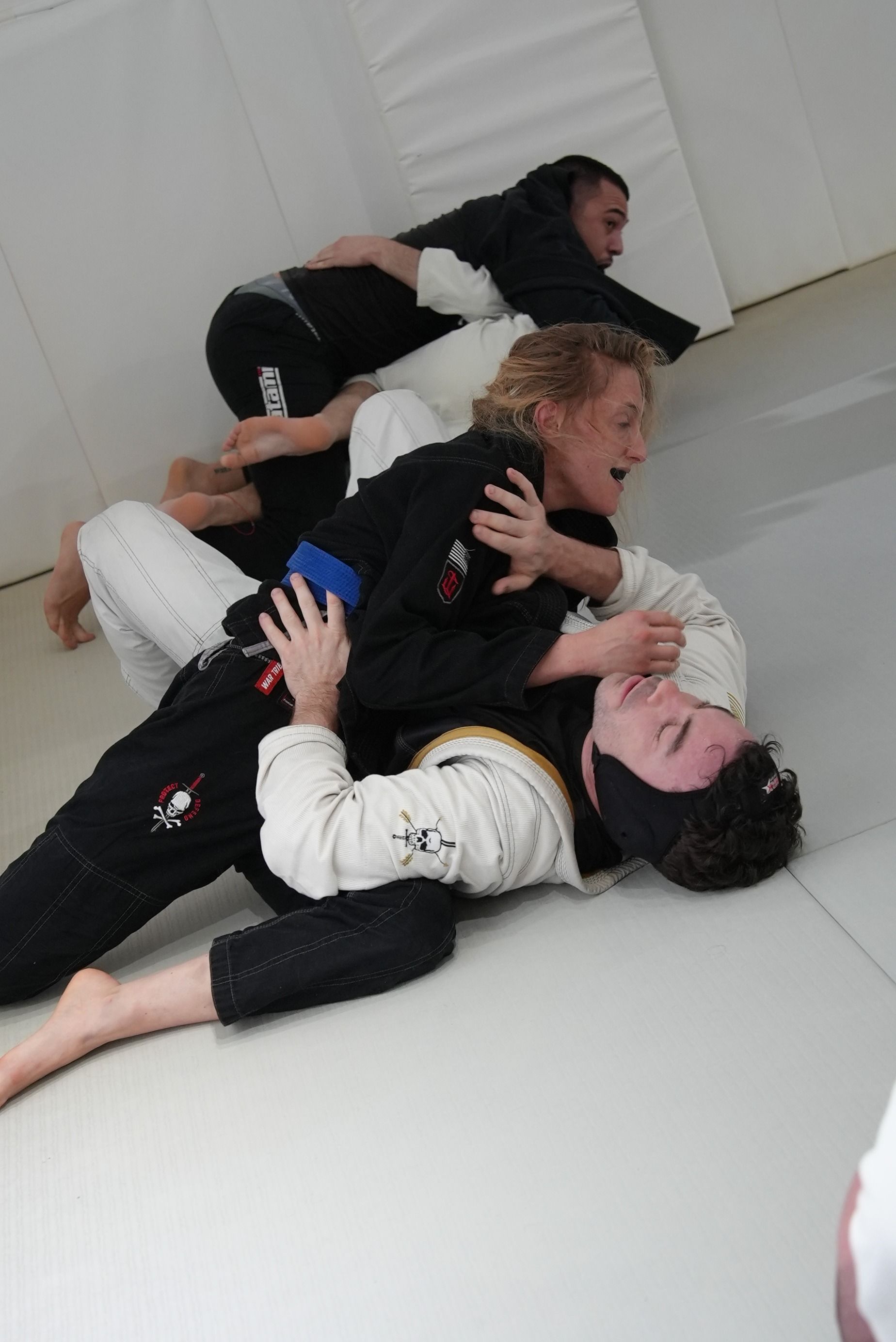
Escapes are the fastest way to feel competent. Learning to escape side control or mount is not glamorous, but it changes your whole experience. Suddenly, sparring becomes learning instead of panic.
Breathing and posture under pressure
Many beginners hold their breath and tense everything. We coach you to breathe, frame, and move your hips rather than pushing with your arms until you gas out. It is less dramatic and far more effective.
A Simple 90-Day Beginner Roadmap That Works in New York
The fastest way to improve is not to train “as much as possible.” It is to train consistently enough that your body adapts and your brain keeps the patterns. For most adults in NYC, 2 to 3 sessions per week is the sweet spot.
Here is a practical 90-day plan we like because it is realistic and measurable:
1. Weeks 1 to 2: Learn how to move safely, tap early, and recognize common positions
2. Weeks 3 to 6: Build core escapes, guard retention basics, and one or two simple sweeps
3. Weeks 7 to 10: Add controlled sparring goals, like surviving a round without holding your breath
4. Weeks 11 to 13: Start connecting sequences, like escape to guard to sweep, without rushing
If you miss a week because work gets hectic, you are not “behind.” You are just returning to the process. The mat is patient, and progress comes back quickly when you do.
Safety First: How We Reduce Injuries for Beginners
The most common beginner fear is getting hurt, and it is a reasonable concern. Knee injuries are frequently reported in grappling, with MCL strain being a common issue, and shoulder problems are also common. Training, not competition, is where most people get banged up, mostly from moving too hard too soon or getting stuck in awkward angles.
We reduce risk by teaching you to slow down, build stable positions, and choose training partners thoughtfully. We also emphasize tapping early. Tapping is not a loss. It is how you train tomorrow.
A few safety rules we repeat often:
- Protect your knees by avoiding twisting out of pins and by learning clean hip escapes
- Keep your elbows close in defensive positions to reduce shoulder strain
- Use controlled speed, especially in scrambles, until you understand where your base is
- Communicate with your partner if something feels off, even if it feels minor
- Take rest seriously, because fatigue makes technique sloppy
If you have a past injury, tell us. We can help you modify grips, ranges of motion, and intensity so you can train without constantly worrying.
Gi or No Gi: What Should a Beginner Choose?
For adult Brazilian Jiu-Jitsu in New York, both gi and no gi can be excellent for beginners. The gi adds grips and friction, which slows things down and can make learning positions clearer. No gi often feels more athletic and slippery, which can be fun, but it can also move faster.
We like beginners to try both if our class schedule supports it. The skill sets overlap, and the variety keeps training fresh. Either way, the fundamentals are the same: posture, frames, hips, and balance.
Gear, Hygiene, and Mat Etiquette (The NYC Non-Negotiables)
BJJ gear can get expensive, especially in New York, so we keep your startup simple. You can begin with a quality rashguard and appropriate shorts or leggings for no gi. If you jump into gi training, a well-fitting gi matters for comfort and safety. Many beginners start with one set and add later.
Hygiene is not just “nice.” It is part of being a good training partner:
- Wash your gear after every session, no exceptions
- Wear sandals off the mat, especially in locker room areas
- Cover cuts, and stay home if you have skin issues that could spread
- Keep breath and body odor in check with basic prep, because close contact is real
Etiquette is straightforward: be on time when possible, listen when technique is being shown, and treat partners with care. You can train hard without training reckless.
Progress, Belts, and What Results Look Like for Adults
Many beginners want to know how long it takes to get good. A common benchmark is the white-to-blue belt path, which averages about 2.3 years in broad U.S. data. But belts are not the best way to measure early progress, especially in your first year.
Your real early results will look like this: you stay calmer, you tap sooner, your escapes start working, and you can tell what position you are in without guessing. You might also notice body changes, better posture, and improved stress management. BJJ has a funny way of making the rest of your life feel a bit less chaotic, even when the city is doing what the city does.
We also keep the room supportive for adults who are new to training culture. If you have not played a sport since high school, or you are coming in after years of desk work, you belong here. The pace is adjustable, and progress is personal.
What Makes Training Feel Worth It Week After Week
People stick with Brazilian Jiu-Jitsu when training feels purposeful. We use clear lesson themes, consistent fundamentals, and live practice that matches your level. That means you are not just collecting moves, you are learning how to apply them.
And yes, there is an emotional side to it, even for practical New Yorkers. When you solve a problem on the mat, you carry that confidence into your day. You walk out a little tired, a little proud, and usually a little surprised that you learned as much as you did in one hour.
Ready to Begin
Building skill in Brazilian Jiu-Jitsu is a long game, but your first few months set the tone for everything that follows. When you train with structure, prioritize safety, and show up consistently, you stop feeling like you are “trying a class” and start feeling like you are learning a craft.
That is exactly how we design the beginner experience at Range Brazilian Jiu-Jitsu NYC. If you are looking for Brazilian Jiu-Jitsu in New York that respects your time, your body, and your goals, we are ready to help you take the first step and keep going.
No experience is needed to begin to join a Brazilian Jiu-Jitsu class at Range Brazilian Jiu-Jitsu NYC today.