In a city that moves fast, the right mats can slow things down in the best way, helping kids build strong bodies and real friendships.
New York kids juggle a lot: school expectations, packed schedules, small apartments, big emotions, and a steady pull from screens. When parents ask us what helps most, our answer is simple and practical: consistent movement, a supportive routine, and a place where your child feels seen. That is why Youth Brazilian Jiu-Jitsu works so well here, especially when it is taught with structure, patience, and age-appropriate goals.
Youth Brazilian Jiu-Jitsu is also one of the most effective ways to build fitness without kids feeling like they are doing “exercise.” Classes keep kids moving, thinking, and cooperating. And because training is partner-based, the social side shows up naturally. In our experience, that mix is what helps children stick with it long enough to change.
Brazilian Jiu-Jitsu has grown massively worldwide, with more than 5 million practitioners and a sharp increase in academies over the last decade. Search interest in BJJ has surged too, outpacing many traditional martial arts. For NYC families, that growth matters because it reflects something real: parents are looking for activities that build confidence, resilience, and community, not just trophies.
Why Youth BJJ Fits NYC Life Better Than You Might Expect
Space is limited in New York. Time is limited too. A good youth program respects that. Our Youth Brazilian Jiu-Jitsu classes are designed to be efficient: kids get a warmup that actually prepares their bodies, technique that is taught in digestible chunks, and practice that keeps them engaged without chaotic free-for-all energy.
BJJ is also uniquely suited to mixed ages and personalities. Some kids show up bubbly and fearless. Others are quiet, cautious, and need a little runway. Because the art is technical and not dependent on size alone, kids can make progress without needing to be the biggest or the fastest. That matters in a city where children compare themselves constantly, whether we want that or not.
And there is another NYC reality: many parents are balancing work demands and commuting. Having a consistent place where your child is expected, encouraged, and coached can feel like a relief. You check the class schedule, get into a rhythm, and suddenly your week has a calmer anchor point.
Fitness Benefits That Show Up Outside the Academy
A lot of youth fitness programs focus on one or two physical qualities. Youth Brazilian Jiu-Jitsu hits several at once because the movements are varied and functional. Kids learn to coordinate hands and feet, shift their weight, stabilize their core, and control breathing while problem-solving.
Here is what we typically see improve over time:
• Better overall conditioning without kids dreading workouts
• Stronger posture and core stability from grappling positions
• Improved balance and coordination through movement drills
• More body awareness, which helps prevent clumsy injuries in daily life
• Greater flexibility and joint mobility when training is coached correctly
BJJ also supports healthier routines. When kids train regularly, sleep often improves. Appetite becomes more stable. Parents tell us it gets easier to limit screens because there is a positive alternative that feels fun, not forced.
NYC also faces high childhood obesity rates, and preventative activity matters. We like that BJJ feels like play while still building legitimate athleticism. Your child is moving, sweating, and learning. It adds up.
Friendship Happens Faster When Kids Train Together
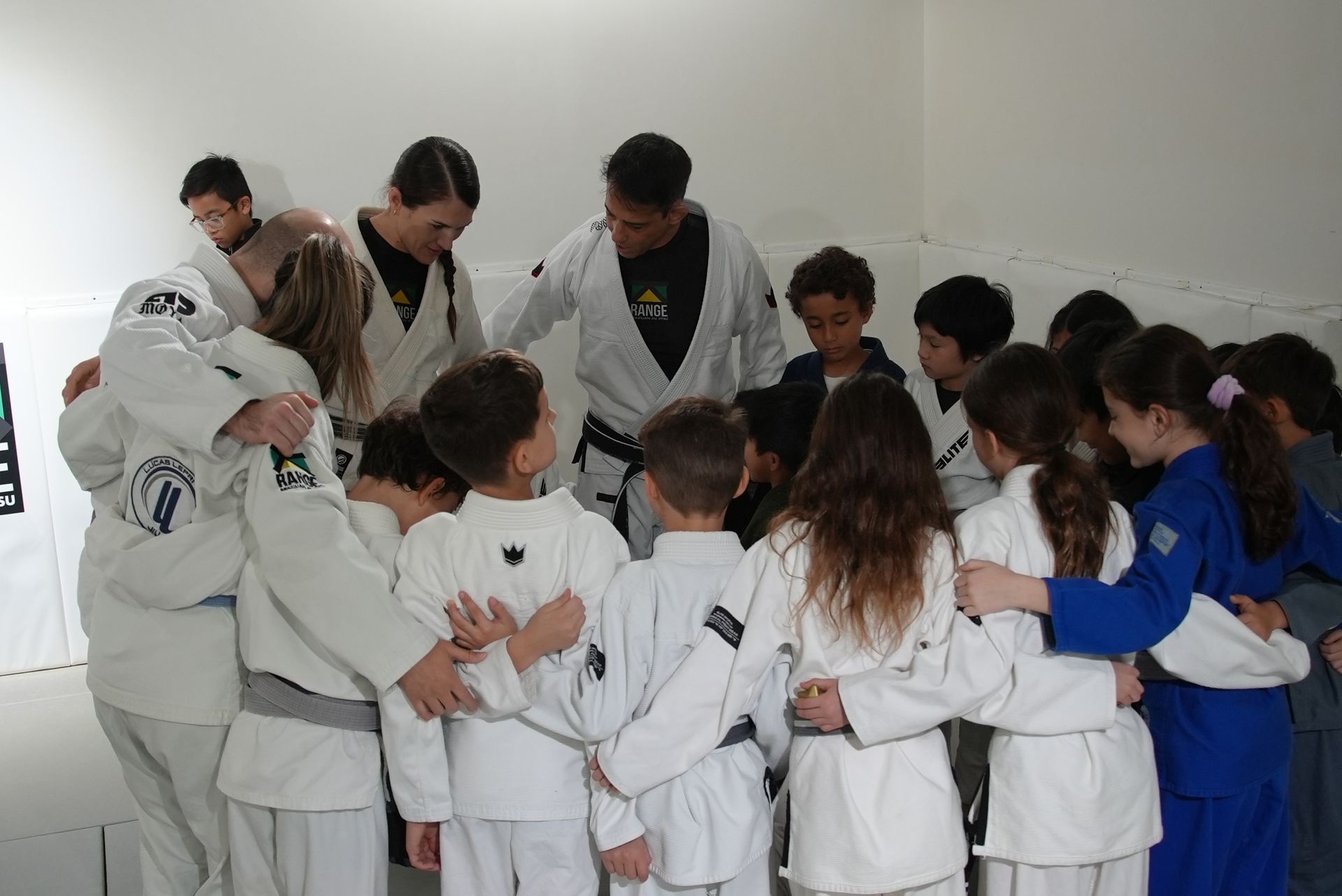
One of the best parts of Youth Brazilian Jiu-Jitsu in New York is how quickly kids connect. In many activities, children stand in lines, take turns, or compete for attention. On the mats, partners rotate. Kids cooperate. They learn each other’s names because they are literally working together.
We also build the culture intentionally. We teach kids to greet partners respectfully, listen during instruction, and help newer students feel welcomed. The result is a kind of community that can be hard to find in a big city where people come and go.
The friendships formed in training tend to be steady because kids see each other regularly and share small challenges. Learning a new guard pass or finally remembering a sequence becomes a shared win. If your child struggles socially, that built-in structure can be a quiet game changer.
Confidence and Character: The Real “Wins” of Youth BJJ
Parents often come in asking about self-defense, but what they really want is confidence. BJJ is a skill-based system, which means your child sees progress through repetition. That is important for confidence because it is earned, not handed out.
In broader surveys, around 85 percent of practitioners report increased confidence after a year of training. Our day-to-day experience lines up with that. Kids start speaking up more clearly. They make eye contact. They handle frustration better. And they learn that improvement is normal, even when it is slow.
We also treat character development as part of the curriculum, not a motivational poster on the wall. Youth Brazilian Jiu-Jitsu naturally teaches:
• Respect for coaches and training partners
• Self-control under pressure
• Resilience after setbacks
• Patience when learning complex skills
• Humility, because everyone taps sometimes
Those lessons transfer. We hear about kids raising their hands more in class, staying calmer during conflicts, and bouncing back from a tough grade or a hard day.
Bullying, Boundaries, and Real-World Self-Defense Skills
Parents worry about bullying in NYC schools, and that concern is valid. Our approach is to teach kids how to carry themselves with confidence, set boundaries early, and de-escalate when possible. Physical techniques matter, but the bigger picture is awareness and control.
Youth Brazilian Jiu-Jitsu is particularly practical because it focuses on leverage, grips, and positions. Kids learn how to escape holds, regain balance, and protect themselves without relying on punching or kicking. For many families, that feels like a safer and more appropriate foundation.
We also reinforce an important message: training is for safety, not dominance. Kids learn to respect partners, use controlled intensity, and stop immediately when instructed. That mindset is part of what makes the program constructive rather than aggressive.
Safety in Kids BJJ: What Parents Should Know
Safety is not an afterthought for us. It is built into how we structure training: supervision, progressive skill development, and rules that kids can understand. Injury rates in BJJ are generally low and comparable to other sports, and data suggests beginners can face slightly higher risks in training than in competition, which is one reason we emphasize fundamentals before intensity.
In our youth classes, safety comes from a few core habits:
• Technique first, speed later
• Controlled partner work with coach oversight
• Clear tapping rules and immediate stops
• Age-appropriate sparring, introduced gradually
• Clean mats and hygiene expectations for every student
If your child is new, we pay attention to emotional safety too. Some kids feel nervous about contact at first. We do not throw them into the deep end. We build comfort step by step.
What Age Should Kids Start, and How Do Classes Change Over Time
Youth Brazilian Jiu-Jitsu can start fairly young, as long as the curriculum is truly kid-centered. Younger kids need short explanations, movement games that teach real mechanics, and positive structure. Older kids and teens can handle longer technical sequences, more intentional drilling, and goal-setting.
We typically see three phases of development:
Kids just starting out
The focus is on listening skills, basic movements, simple positions, and learning how to be a good partner. Progress looks like better coordination and better focus, not perfection.
Growing confidence and consistency
Kids begin linking techniques together and understanding concepts like balance, frames, and leverage. They also start taking pride in helping newer students.
Teens and advanced youth
Training becomes more strategic. Teens benefit from an empowering outlet and, if desired, a competitive pathway. The intensity can rise, but it stays structured and coached.
No matter the age, our goal is the same: build skills that last and keep kids enjoying the process.
Gi vs No-Gi for Youth: Which One Should Your Child Do
Parents ask this a lot, especially in a city where schedules are tight and you want to pick the “right” option from the start. In general, we like the gi for beginners because it slows things down and teaches strong fundamentals: grips, posture, control, and patience. No-gi can be great too, especially as kids progress and want variety.
If you are unsure, we guide you based on your child’s age, temperament, and goals. The best choice is the one that keeps your child training consistently, because consistency beats perfect planning every time.
What a Typical Youth Class Looks Like (So You Can Picture It)
Knowing the flow helps parents feel comfortable, especially if martial arts are new in your family. While the details vary by age group, most classes follow a reliable structure:
1. Warmup and movement skills that support grappling, like shrimping, rolls, and balance drills
2. Technique instruction with clear themes, usually one position or concept at a time
3. Partner drilling with coaching, so kids practice correctly and safely
4. Controlled sparring or situational rounds when students are ready
5. A brief wrap-up focused on effort, respect, and what to work on next
This structure keeps energy high but organized. Kids leave tired in a good way, not fried.
Making It Work With Busy NYC Schedules
We keep the program practical for city families. Classes are designed to fit into after-school routines and weekend plans without needing an all-day commitment. The class schedule makes it easy to choose consistent days, which is the real secret to progress.
We also encourage a simple approach at home: hydrate, eat a balanced meal after training, and prioritize sleep. If you like tracking habits, wearables and apps can help families stay consistent, but we keep that optional. The mats do the heavy lifting.
Take the Next Step
If you want your child to be active, confident, and connected in a city that can feel surprisingly isolating, Youth Brazilian Jiu-Jitsu is one of the most complete options available. It blends fitness, focus, and real social belonging in a way that tends to stick, even for kids who have bounced off traditional sports.
When you are ready, we would love to welcome your family to Range Brazilian Jiu-Jitsu NYC and help you find the right starting point for your child, whether that means building basics, building confidence, or simply building a healthier weekly routine.
New to Brazilian Jiu-Jitsu? Start your journey by joining a Brazilian Jiu-Jitsu class at Range Brazilian Jiu-Jitsu NYC.